
Attention to regulations and safety urged for upcoming turkey season
Turkey hunting season opens March 26
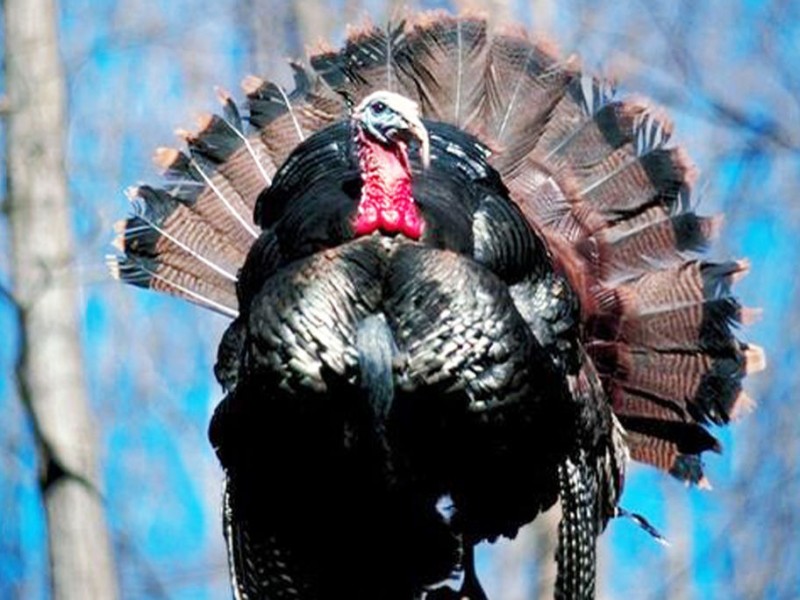
File Photo: Georgia DNR
By Bob Kornegay
Hunters are eager for opening day of the statewide turkey hunting season in Georgia. The anticipated day is Saturday, March 26 and the Georgia Department of Natural Resources’ Wildlife Resources Division expects the 2016 season to be a fair one.
“Perspective is important because Georgia is still in the top six states in terms of eastern wild turkey harvest and population, even while we have had some declines in reproduction and the overall turkey population,” said Kevin Lowrey, Wildlife Resources Division wild turkey project coordinator. “Hunters heading to the woods need to remember that there is a new requirement this year to have a harvest record and that they will need to report their harvest through Georgia Game Check.”
With a generous bag limit of three gobblers per season, hunters have from March 26 through May 15 (one of the most liberal turkey seasons in the nation) to harvest their bird(s). With many pursuing wild turkeys on private land, hunters are reminded to always obtain landowner permission before hunting.
What should hunters expect this spring? The Lower Coastal Plain and Ridge and Valley will have an above average season this year and next year, due to better reproduction levels than other parts of the state. While other regions saw some reproduction improvement in 2015, the lower cycle in 2014 may mean fewer 2-year old gobblers, so hunters likely will be pursuing older birds, which may raise the challenge level.
New this year: all turkey hunters, including those under 16 years of age, landowners, honorary, lifetime, and sportsman license holders, must obtain a free harvest record each season. Before moving a harvested turkey, hunters are required to immediately enter the date and county on the harvest record and within 72 hours must complete the reporting process through Georgia Game Check. More information about this requirement may be found at www.georgiawildlife.com/HarvestRecordGeorgiaGameCheck.
A WMA license is required for any person 16 years or older who does not possess a valid honorary, sportsman, or lifetime license when hunting wild turkey on a WMA or public fishing area. In addition, a valid hunting license and a big game license are required. Legal firearms and archery equipment for hunting wild turkey are shotguns (loaded with No. 2 or smaller shot), any muzzleloading firearm, longbow, crossbow, or compound bow.
The restoration of the wild turkey is one of Georgia’s great conservation success stories. Currently, the bird population hovers around 300,000 statewide, but as recently as 1973 the wild turkey population was as low as 17,000. Intensive restoration efforts, such as the restocking of wild birds and establishment of biologically sound hunting seasons facilitated the recovery of wild turkeys in every county. This successful effort resulted from cooperative partnerships between private landowners, hunters, conservation organizations like the National Wild Turkey Federation, and the Wildlife Resources Division.
“Each time hunters purchase a license or equipment used to turkey hunt; such as shotguns, ammunition and others, they become part of this greater conservation effort for wildlife in Georgia,” said Lowrey. “Through the Wildlife Restoration Program, a portion of the money spent comes back to states and is put back into on-the-ground efforts such as habitat management and species research.
Heading to the woods to go turkey hunting requires more than just ensuring your firearms are ready. The Wildlife Resources Division encourages all hunters to review important turkey hunting safety tips.
“Firearms safety knowledge is critical to keeping you and others safe in the woods,” advises Walter Lane, WRD hunter development program manager. “In addition to firearms safety tips, hunters should review and practice safety precautions relative to turkey hunting.”
1. Never wear red, white, blue or black clothing while turkey hunting. Red is the color most hunters look for when distinguishing a gobbler’s head from a hen’s blue-colored head, but at times it may appear white or blue. Male turkey feathers covering most of the body are black in appearance. Camouflage should be used to cover everything, including the hunter’s face, hands and firearm.
2. Select a calling position that provides at least a shoulder-width background, such as the base of a tree. Be sure that at least a 180-degree range is visible.
3. Do not stalk a gobbling turkey. Due to their keen eyesight and hearing, the chances of getting close are slim to none.
4. When using a turkey call, the sound and motion may attract the interest of other hunters. Do not move, wave, or make turkey-like sounds to alert another hunter to your presence. Instead, identify yourself in a loud voice.
5. Be careful when carrying a harvested turkey from the woods. Do not allow the wings to hang loosely or the head to be displayed in such a way that another hunter may think it is a live bird. If possible, cover the turkey in a blaze orange garment or other material.
6. Although not required, it is suggested that hunters wear blaze orange when moving between a vehicle and a hunting site. When moving between hunting sites, hunters should wear blaze orange on their upper bodies to facilitate their identification by other hunters.
Related Articles
Georgia Tech embraces lofty expectations at ACC Media Days
Photos by Miles Lineberger
Earliest Opening Day in history highlights 2027 MLB schedule
Taking out Opening Night games, the Major League Baseball season has never started earlier than March 26. But the league will host its earliest Opening Day ever in 2027 as part of its regular season schedule.
LeBron James praises Lakers, declines to reveal next team at public appearance
LeBron James did a live taping of his podcast on Thursday in New York, but he made it clear from the jump that he wasn’t there to break news.
