
University of Georgia study shows heat dangers of inflatable bounce houses
The heat index inside an inflatable can hit 117 degrees on a hot summer day
By Staff Reports
ATHENS — Bounce houses, popular at children’s birthday parties and at festivals and other events, can pose a health risk to children in hot weather, researchers at the University of Georgia have found.
The study, “Do Inflatable Bounce Houses Pose Heat-related Hazards to Children,” was published Thursday in the early online edition of the Bulletin of the American Meteorological Society.
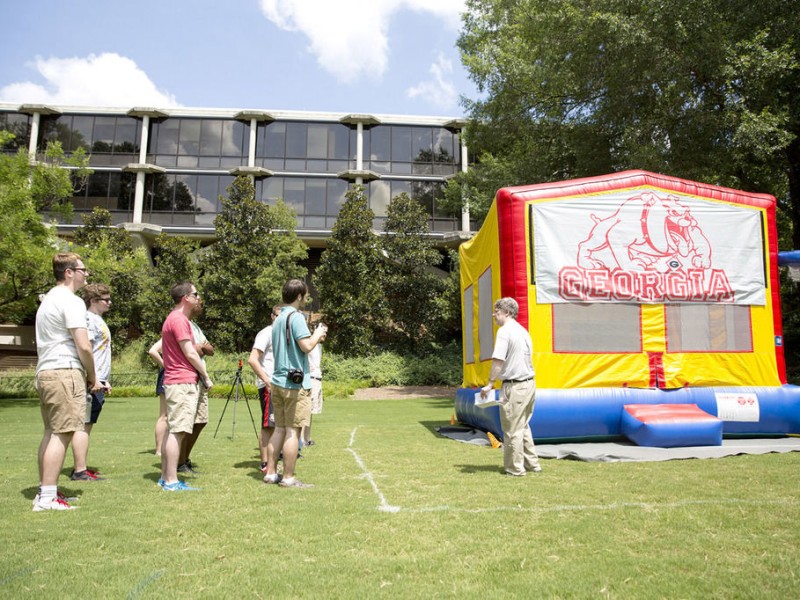
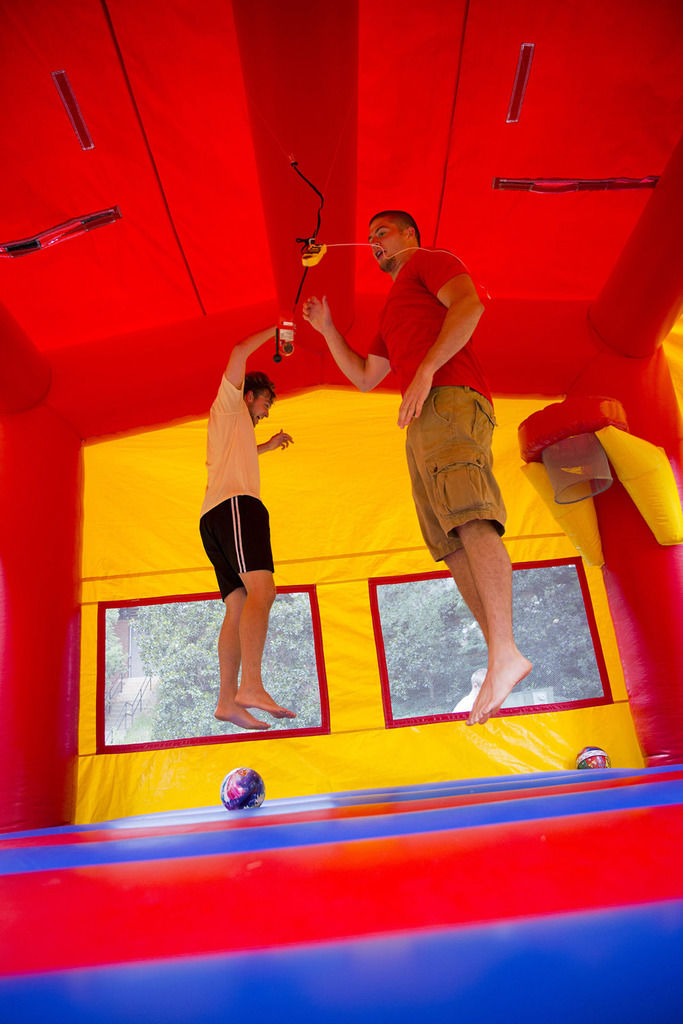
The findings were based on experiments with a bounce house on the UGA campus in July 2015. Researchers found that the temperature in the bounce house added 4 degrees to the outside temperature and peaked at 7 degrees higher. The heat index, which takes into account humidity and gives a measure of how hot it actually feels to a person, averaged 104 degrees and peaked at 117, placing the bounce house temperatures in the danger area, according to National Weather Service guidelines.
Researchers say the findings show parents and adults must be attentive when children are playing in the inflatables during hot weather. Children, like elderly adults, are more sensitive to the effects of extreme heat, according to the Centers for Disease Control and Prevention.
“Heat illnesses like heat stroke can be deadly and occur in children participating in sports, left alone in parked cars, and as our study shows, potentially when playing in bounce houses,” said Andrew Grundstein, UGA professor of geography and co-author on the study. “Children are more sensitive to heat than adults and parents need to carefully watch their children for signs of overheating when active on hot and humid days.
“Signs there is a problem may include fatigue, nausea, vomiting, dizziness, and flushed, moist skin.”
While heat dangers in parked cars, which can soar because of the greenhouse effect of trapped air in the auto, have been well documented, this was a first look at bounce houses.
“This research is a preliminary look at something that no one had really examined in the published literature,” said Marshall Shepherd, UGA Athletic Association Distinguished Professor of Geography and Atmospheric Sciences and co-author of the study. “I knew it was a problem when I watched my child in one on a particularly hot day and our early findings confirmed my suspicions.
“Hopefully, it makes parents more aware of something they probably overlooked.”
UGA officials said the study examined specific research questions that compared temperature and moisture conditions inside the bounce house to ambient outdoor conditions, and whether such differences might reach levels that pose health risks. The researchers conducted the study under weather conditions typical for a summer day in Athens over a five-hour period.
Their findings showed that, on a 92-degree day, the bounce house added almost 4 degrees to the air temperature, peaking at 7 degrees above the outside temperature when the inside temperature exceeded 100 degrees.
When they considered the heat index, the average was 104 degrees, more than 7 degrees hotter than outside the inflatable, and peaked 8 degrees hotter at a whopping 117 degrees. As a guide to help public safety officials, the media and parents assess possible heat-related hazard to children, researchers developed a modified heat index table presented in Fahrenheit that is included in the study.
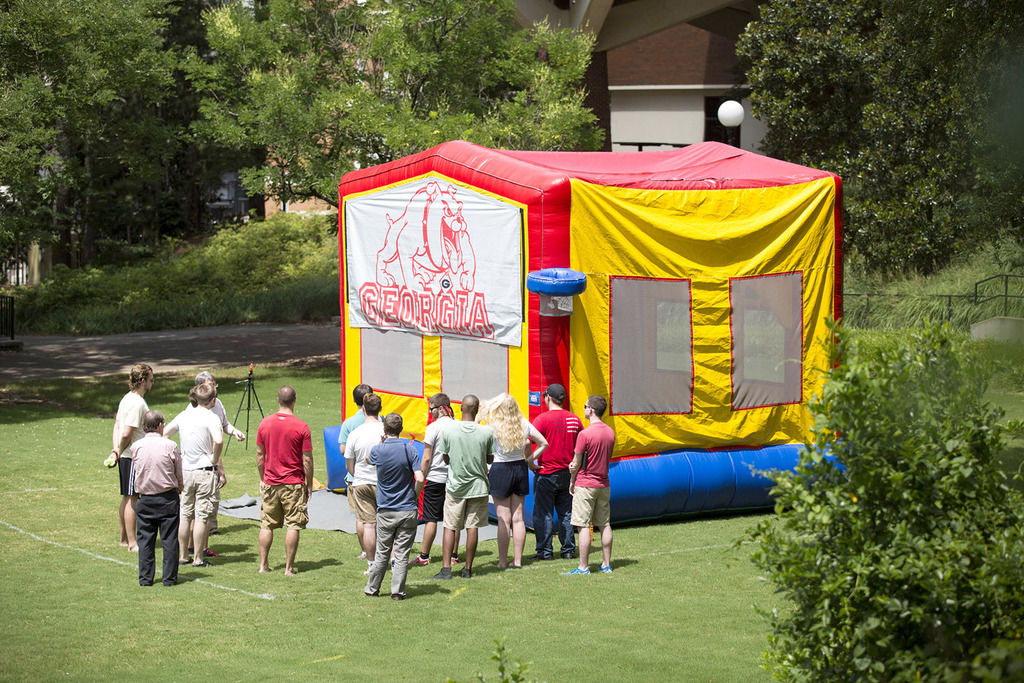
The experiments in July 2015 took place in conjunction with a demonstration on weather-related bounce accidents in a “Collaborative Research in Atmospheric Sciences” class. The seminar, “Meteorological and Policy Contexts of Bounce House Accidents,” involved students in the department of geography and is the focus of other forthcoming research by faculty on other significant hazards of bounce houses, including wind blown risks and outflow from thunderstorms.
Related Articles

Dawson Council approves $400,000 lifeline in emergency meeting as financial accountability remains elusive
Less than a week after city officials publicly acknowledged the City of Dawson cannot continue operating without additional financing, the Dawson City Council convened a hastily called emergency meeting Tuesday evening and unanimously approved authority to borrow up to $400,000 through a tax anticipation note.

Adult leadership group spreads concept to high school students
“The purpose of Albany Junior Leaders is to pull together leaders from all over the community. We wanted to give these youth the same experience and the same exposure we’re getting in Leadership Albany.”

Albany/Dougherty County among local governments looking at data centers
“Our understanding is that data center developments look like an easy fix for the problems that face rural America, but this is a Faustian deal at best. You can see the effects in communities across the state and country.
