
MAC GORDON: Be counted … but make sure census-takers are legit
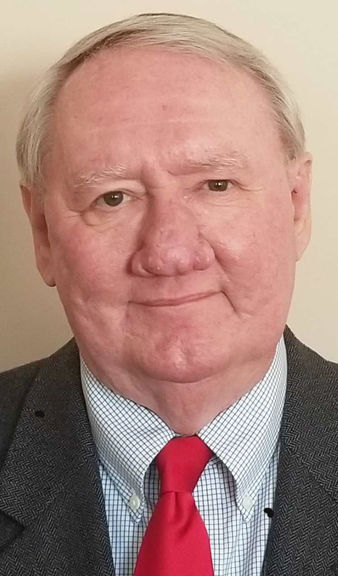
By Mac Gordon
[email protected]
The 2020 U.S. Census is upon us. One word needs to be said before the count begins: Beware.
I don’t mean that you should beware of the census itself. It is one of the most important actions the federal government undertakes every 10 years because of the many factors hanging in the balance of our being counted.
Georgia is believed to have a population of 10.2 million people, possibly more with a complete count this year.
If someone knocks at your door and pronounces to be a census-taker, do all you can to make sure that they are who they say they are. I painfully learned that lesson in recent weeks when someone at our door claimed to be a census worker, but apparently was not. I am told that rural Clay County where we live has not even begun its efforts to make the count of its citizens.
Varying groups contract with the government to conduct the census. They are led by individuals with the best interests of you, the state and the local community at heart.
Much of this work will be conducted online, thus a goodly portion of the population might not ever actually see a worker. In deeply rural counties like Clay, a lot of door-to-door, face-to-face contact will still be required because many of my fellow citizens do not have a computer or the knowledge required to be counted. Some telephone and on-paper registration also will occur.
Another word of caution: Don’t ever give anyone your Social Security or bank account numbers, even real census takers.
Why does the census matter? For starters, being counted means more federal dollars flowing into the state. Georgia will receive $2,300 for every person counted. In 2010, that meant $15.9 billion was sent to this state to be distributed across myriad federal programs, including Medicaid, SNAP and WIC, school lunches, Special Education and Head Start, foster care and housing assistance. In a county as poor as Clay, those programs touch almost every citizen.
The census also affects the number of members of the U.S. House of Representatives assigned to each state. Congress is reapportioned based on the count in each state. Georgia has gained three members since the 2000 Census.
The greatest benefit to the count in my opinion is how it affects public education. Cliché as it is, that’s where the rubber meets the road – education of the citizenry.
Residents of this state might be under the impression that Georgia ranks high in education achievement in the U.S. It actually ranks 34th, so we’re not even in the top half.
Only 50-percent of Georgia’s 3- 4-year-olds are in school; only 63-percent of third-graders are proficient in reading; only 69 percent of eighth-graders are proficient in math; and 18 percent of high school students do not graduate on time.
Many factors cause those predicaments, including lack of parental help and supervision. A full count of heads will mean the state receives more in the future than the $1.6 billion for education-related programs already coming to the state.
Improving the education level of our kids would mean a greater prosperity for southwest Georgia, where in both Clay and neighboring Early counties, more than 40 percent of kids live in poverty. And each of those counties’ median household income is well below the state average of $56,117 annually.
So obviously there is much at stake in the upcoming census for Georgia in general and the southwest corner in particular, not the least of which is an improved quality of life for all. Please be counted.
Related Articles

Squawkbox – July 4, 2026
Regarding the changes to the Squawkbox… Lee County officials encountered a screw-up with… Bo and Preacher Lorenzo and his disciples should reflect on why…

CARLTON FLETCHER: Lousy customer service leaves a fowl taste
Before I get into this, let me say from the get-go that I understand that we all have bad days, that the aggravations of life can put a damper on everything that gets in our way on a given day.

Squawkbox – June 27, 2026
Albany’s “leadership” is involved in criminal activity and will be… Franklin Graham and the other pastors of “super churches”…
