
Across a county line, foster care rates reveal stark divide
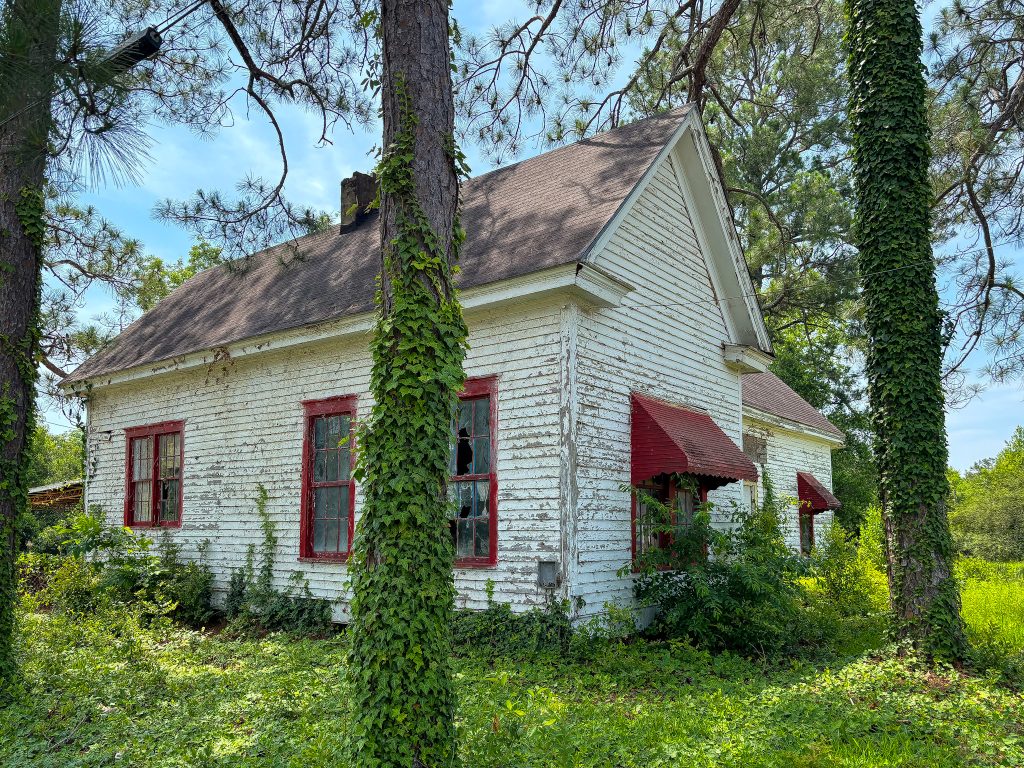
An abandoned home in Dawson sits overgrown and deteriorating, one example of the city’s ongoing struggle with blighted and unusable housing. Dawson’s long-range planning documents identify both a high vacancy rate and a need for more safe, affordable housing. Staff Photo: Kathryn Crockett
Terrell County’s foster care removal rate was more than four times neighboring Lee County’s last year. The difference does not prove poverty causes removal, but Georgia data show housing and access to services can make keeping — and bringing — families together harder.
DAWSON — Foster care is intended to be temporary, with reunification the goal whenever children can safely return home and doing so is in their best interest.
But across the county line separating Terrell and Lee, the likelihood of entering foster care looked markedly different last year.
Nine children entered foster care in Lee County. Eight did so in Terrell.
Once population is taken into account, Terrell County’s removal rate was 44.3 per 10,000 children — more than four times Lee County’s rate of 10.3.
The economic divide is similarly stark. About one-third of Terrell County residents live below the poverty line, compared with about 6% in Lee County. Median household income is roughly $46,000 in Terrell and $89,000 in Lee.
Those numbers do not prove poverty caused any individual child to enter foster care. Terrell’s eight cases are too few to establish a trend or explain why any particular child was removed.
But they do, however, raise a broader question for one of southwest Georgia’s poorest counties: How often do the conditions associated with poverty — particularly housing and access to services — make it harder to keep families together or reunite them after a removal?
The county figures come from federal Adoption and Foster Care Analysis and Reporting System data compiled by Fostering Court Improvement. Among Terrell County’s eight removals between April 2025 and March 2026, caretaker inability to cope was cited in four cases, abandonment in three, child behavior in two and neglect in one. More than one reason can be recorded for the same child.
Inadequate housing was not directly cited in those eight cases. But housing has become an increasingly visible issue both in Georgia’s foster care system and in Dawson itself.
Dawson’s own long-range planning documents identify the need for more safe, affordable housing even as hundreds of housing units sit vacant and uninhabitable.
The city’s 2024 comprehensive plan counted 2,054 housing units in Dawson, with more than a quarter vacant. The plan also identified substandard and dilapidated housing in need of rehabilitation and called for efforts to expand affordable housing for low- and moderate-income residents.
More than two-thirds of the city’s occupied homes were rentals.
Just a simple drive around the county seat proves that a vacant house, however, is not necessarily a house a family can move into. Some properties are deteriorated, unavailable for rent or require substantial repairs before they can be safely occupied.
Dawson officials and members of the public alike have increasingly turned their attention to that problem.
Code Enforcement Officer Gregory Warren told The Albany Herald last year that most of the properties he encountered that were not meeting city code were residential, and about 30% were unoccupied.
“The goal is to build relationships and to educate the community, show them what needs to be done to revitalize the community and keep it safe and comfortable,” Warren said.
Last month, the Dawson City Council also moved forward with provisions in its city code dealing with blighted property as officials continue efforts to address deteriorating buildings.
While there’s no established connection between the condition of available housing and Terrell County foster care, it does clearly illustrate the housing environment in which low-income families are being asked to find and maintain safe homes.
And housing is one of the clearest places where poverty and child welfare intersect in Georgia. Between Fiscal Years 2018 and 2022, the Georgia Division of Family and Children Services listed inadequate housing as the sole reason for removing children in more than 700 cases, according to an analysis of federal data by WABE and ProPublica published by The Current.
Housing was cited alongside other concerns in thousands more — about 20% of Georgia’s nearly 31,000 removals during the five-year period.
Georgia appellate courts have ruled that unstable housing and employment alone do not constitute abuse or neglect sufficient to justify removing a child. But once housing becomes part of a foster care case, securing an adequate home can become one of the conditions a parent must meet before a child can return.
The state has historically spent comparatively little helping families solve that problem directly. During the same five-year period, DFCS spent more than $450 million through programs that could be used to preserve families, according to the investigation. Less than one-half of 1% went toward housing assistance.
Meanwhile, the state was paying at least $830 to $980 a month to place one child in a standard foster home, with substantially higher costs for children requiring specialized care.
A DFCS spokeswoman told WABE and ProPublica that untreated mental health conditions, substance abuse or other underlying issues often accompany housing instability and that the agency refers families to community resources.
But for parents who have addressed other concerns, housing can still stand between them and reunification.
Georgia children whose reunification cases cited inadequate housing spent a median of about 11 months in foster care, compared with eight months for children whose cases did not, according to a separate analysis of federal foster care data. That is roughly 95 additional days apart.
Housing is not the only resource that can be harder to secure in a rural community.
Amanda Farley, who now coordinates Terrell County Family Connection, previously described the problem while discussing Family Connection’s work in neighboring Calhoun County.
“To get anywhere, it’s a 45-minute drive; so a lot of our projects are centered around trying to bring things directly to citizens,” she said.
Terrell County Family Connection brings together DFCS, schools, health providers, local government, law enforcement and nonprofits with the stated goal of addressing the root causes of problems facing families. Those barriers can become even more significant when a parent is working toward reunification.
A case plan may require counseling, substance-abuse treatment, drug testing, visitation and court appearances while the parent also maintains employment, transportation and appropriate housing.
A service being available somewhere in southwest Georgia does not necessarily mean a parent can easily get to it.
Terrell County’s data also show why the story does not end when a child enters foster care. Three of the county’s eight removals last year involved children who had previously left the system and returned.
At the end of March, 23 Terrell County children remained in foster care. Twelve were living with relatives, while seven had already spent more than two years in care. And among 12 children who entered foster care during the previous reporting period, only one reached permanency within 12 months. Statewide, nearly one-third did.
SOWEGA CASA provides court-appointed advocates for children in Terrell County and the Pataula Judicial Circuit, following cases through the court and child welfare systems with the goal of helping children reach safe, permanent homes. Those outcomes depend on far more than the reason recorded on the day a child is removed.
They depend on whether relatives can provide a safe home, whether parents can reach required services, whether suitable housing is available and how quickly caseworkers and the courts can resolve the conditions that brought a family into the system.
That is what makes the difference between Terrell and Lee counties worth watching beyond a single year.
Terrell’s removal rate was more than four times higher, and poverty nearly six times as prevalent, than in Lee County just a stone’s throw away. That disparity plays out in a community already grappling with blighted housing, limited services and the basic difficulties of getting help in a rural county.
For Terrell County, the question is not simply why eight children entered foster care last year. It is whether families in Dawson and across the county can get the housing, transportation and support they need before a temporary crisis becomes a permanent separation.
Across the county line, the numbers look very different. The challenge is understanding why.
Related Articles
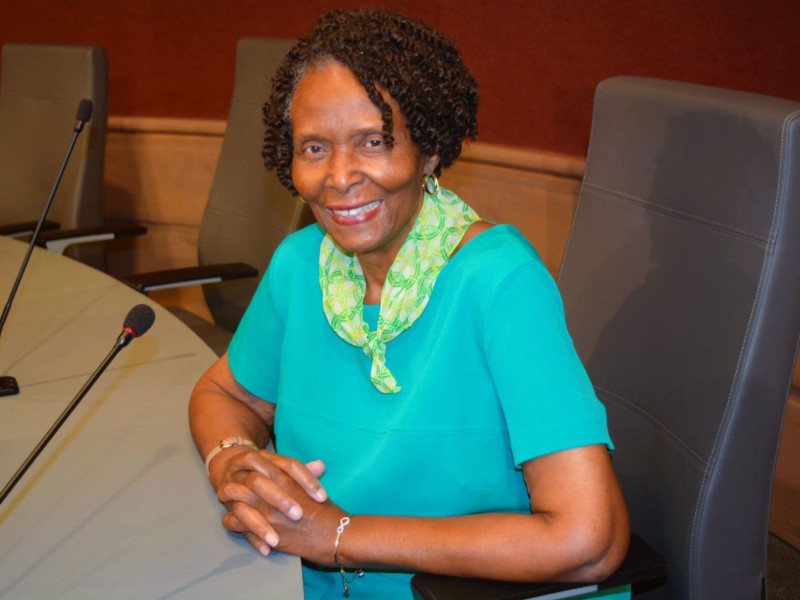
Dougherty Commissioner Gloria Gaines to serve as honorary sponsor of 2027 international conference in Atlanta
“By Alan Mauldin
[email protected]
ALBANY – In 1898 academic and sociologist W.E.B. Du Bois traveled to southwest Georgia during his summer break from teaching to investigate the lives of black residents in the “Black Belt” and later covered his sociological studies of the region in two chapters of his book “The Souls of Black Folk.”
The academic and peace activist’s visit and subsequent account was more than an intellectual exercise, however, according to Dougherty County Commissioner Gloria Gaines.
Du Bois’ account inspired South Carolina native Joseph Winthrop Holley to move Albany, where he founded the Albany Bible and Manual Training Institute. The institute later became part of the University System of Georgia and became a four-year college in 1943 before its last renaming in 1996 as Albany State University.
Holley was inspired by Du Bois’ writing, said Gaines, who will be an honorary sponsor of The International Conference on W.E.B. Du Bois: Race, Democracy and Global Justice in 2027. The conference is scheduled for April 9-11 in Atlanta.
“I am in admiration (of) his impact on the founding of Albany State University,” she said. “I also appreciate his political philosophy as well. He was clearly identified with Atlanta University and education.”
During her time at Albany State Gaines worked in the office of civil rights attorney C.B, King.
She holds a master’s degree in community development and worked as an assistant general manager for MARTA.
Her travels also have taken her to Africa, where she worked and met Nelson Mandela and Archbishop Desmond Tutu.
For the 2027 conference, Gaines has collaborated with individuals including professor Preston King, C.B. King’s youngest brother..
Last year she traveled to Accra, Ghana, where DuBois died after he was stranded out of the United States for his opposition to nuclear weapons and had his passport renewal denied, for his 157th birthday celebration.
The conference will feature discussions of democracy, equality and human dignity, Gaines said
“Those are issues that were important to him,” she said. “Now is a good time to talk about democracy. Some may see it as under threat. I think this conference will be timely. It’s a timely issue, not just for black folks as well as human dignity and equality within the country.”

Crime in Albany is flat. Residents’ fear of it isn’t
Albany police recorded 1,200 crimes against persons from January through July. In the same seven months of 2025, they recorded 1,202 — a difference of two incidents.
Albany recycling center enacts material separation rule
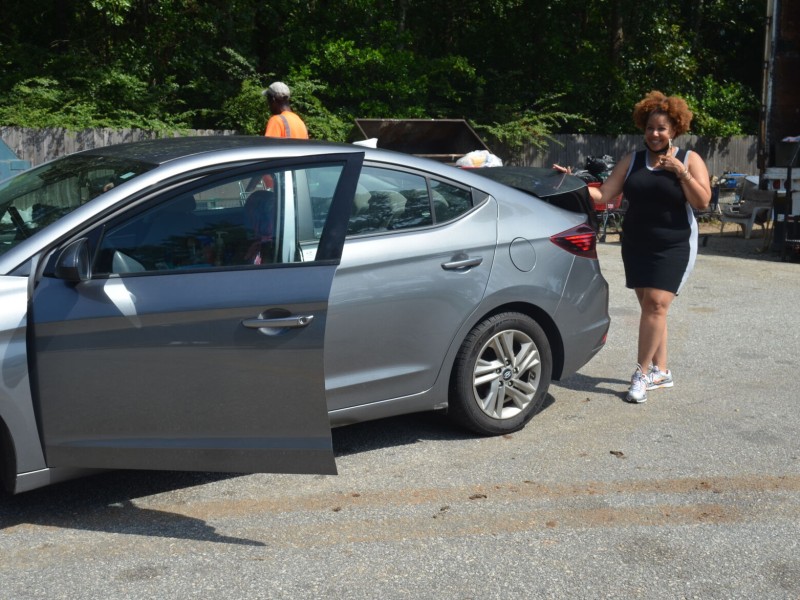
Mixed items will no longer be accepted at the Albany recycling center at its 2521 Meredyth Drive facility. Individuals will now be required to separate items befor they will be accepted.
