One person’s modern-day miracle … saved by the ‘dream team’
The following story is one man’s accounting of life-altering cancer treatment,

Despite the skepticism that is pervasive today, miracles do take place at special places like the Phoebe Cancer Center.
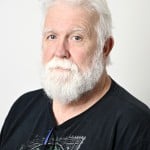
Editor’s Note: One of the first rules of journalism is not to insert yourself into the story you’re telling. Except for columns that are personal to me, I’ve tried to adhere to that rule, with varying levels of success, throughout my career. But this story is about me, about having Stage 4 colon cancer and surviving. I write this as I mark some 20-plus years of remission, not as some attempt at self-glorification, but to offer 1) hope to others who receive similar diagnoses and 2) to encourage high-risk and age-specific individuals to get tested. I almost waited too late. Please don’t do the same.
ALBANY – Dave McEwen and his family were among my favorite people, not that that fully registered as I sat, in a daze, in a room filled with others who were at various stages in their own cancer “journeys,” we’ll call it, although I really hate that term. It implies a trip taken for pleasure. There was no pleasure in my life at that time.
A day before, I’d heard a word that scared me more than anything I’d ever experienced in my life to that point. I was still loopy from the medication after I slowly started coming back to reality after a colonoscopy, and while I kept fading in and out, I grew wide awake when I heard Dr. Ira Knepp say, “You have cancer.”
Life as I knew it crumbled. I tried to think of other things – anything – but I kept coming back to that one word.
Cancer.
And so it was, the next day as I sat in that room with others who’d gotten similar bad news. “I have cancer,” I thought, and that thought ran on a loop. What woke me from this fugue state was the site of Dave. I’ll never forget the look he gave me, this man who was perilously close to losing his own battle with the dread disease. “You’re in for the fight of your life,” he said.
Some of the things I now know about my treatment, I learned afterward. Things like how only a small percentage of people who were in similar circumstances survived at that time. And how it was suggested that the best treatment for me might be to “just make him as comfortable as we can.”
But God smiled on me. It turned out that I had the “dream team” of local oncologists who’d taken on my case: Dr. Doug Calhoun would do the surgery that was necessary for my continued survival; Dr. Chuck Mendenhall would take care of radiation oncology treatment, and Dr. Phillip Roberts, the man who, after my father – and maybe John Lennon – I admire most in the world, would be my oncologist.
Treatment was a horror story. I remember my first trip into the infusion room, where other patients in various stages of cancer treatment “hung out.” I met some of them, and they encouraged me as my treatment started. But some days as I looked around at this place of horrors, thinking to myself “I don’t belong here,” I would just cry uncontrollably.
They put a port in my chest so that I could stay connected to the chemotherapy/medication that fought the cancer. It stayed hooked up for six days a week, 24 hours a day. (I had to train myself to sleep with a bag of chemo hanging on the bedpost.) On that other day, Mondays, I would sit in the infusion room for 9-10 hours, a different concoction of medications flowing directly into my veins. I ate a lot of stale ham sandwiches volunteer ladies of mercy would bring around, and I listened to a lot of Metallica and White Stripes on my headphones.
I tried my best to stay upbeat, but there were many days when I looked around and couldn’t stop the tears from flowing.
Then came surgery. Dr. Calhoun had told me, “You have a tumor. We’re going to treat it with radiation (15 to 30 minutes a session, five days a week) to shrink it. If we’re successful, I’ll remove the tumor and hopefully things will get back to normal. If not, you will have a colostomy the rest of your life.”
(A little side note about colostomies. I was attached to one for months after my surgery, and don’t let anyone tell you this is a situation you can “get used to.” I have horror stories that say different. Suffice it to say the day they reconnected my insides and I could use the bathroom again was one of the happiest of my life.)
I awoke from the surgery, and for a while there was a growing amount of pain as my “team” encouraged me to get up and walk. I tried my best, but there were some dark times. I coded. Yes, I stopped breathing and had to be brought back – in the literal sense; I experienced an alternate reality that I won’t write about … let’s just say there was a glowing light.
And there was a time during the early part of my recovery that the pain and the circumstances became too much for me, and I gave up. I convinced myself that it was time for me to die. But my son was with me – God, I love Steve Fletcher – and he did something for which I’ll forever be grateful. Standing at the head of my bed, he started pushing the little morphine drip. To keep patients from getting addicted, only a small dose of the pain-killer is allowed every little while. Steve mashed it every time it was available, and I finally drifted off. When I awoke, I felt better and was in a much better frame of mind.
There was the reattachment surgery, and I got a staph infection at the port site while in recovery and had to spend eight more days in the hospital, but I can proudly say now that I beat some pretty long odds and have been given extended overtime that’s allowed me to enjoy some of the greatest experiences in this life.
Let me say this as a warning: Going through what you have to go through in circumstances like this is no picnic. It’s embarrassing; it’s painful; and the fear is ever-present. And, even today, 20-plus years later, I have medical issues related to this time that still impact my life.
But you know what? I’m here. I got to experience the births of my grandchildren. I’ve gotten to do so many things I never thought I’d experience. (Thanks, Tara!) And I’m happier now than I’ve ever been. I have enough faith to think there’s a reason I was spared. I don’t know what it is, but I hope I’ll be able to recognize and act upon it.
If you’re of the age at which medical professionals tell you to get a colonoscopy or some other kind of test, I beg you to do so. With the advancement in treatment, early detection gives you a great chance at complete recovery. If you’ve been diagnosed with cancer, though, do not give up hope. I’m a living example that even in this day of medical and technical advancement, miracles still happen. Even for those who aren’t necessarily deserving.
Author