
Eclipsing myths
Monday’s solar eclipse won’t hurt your unborn child or tell your future
By Jim Hendricks
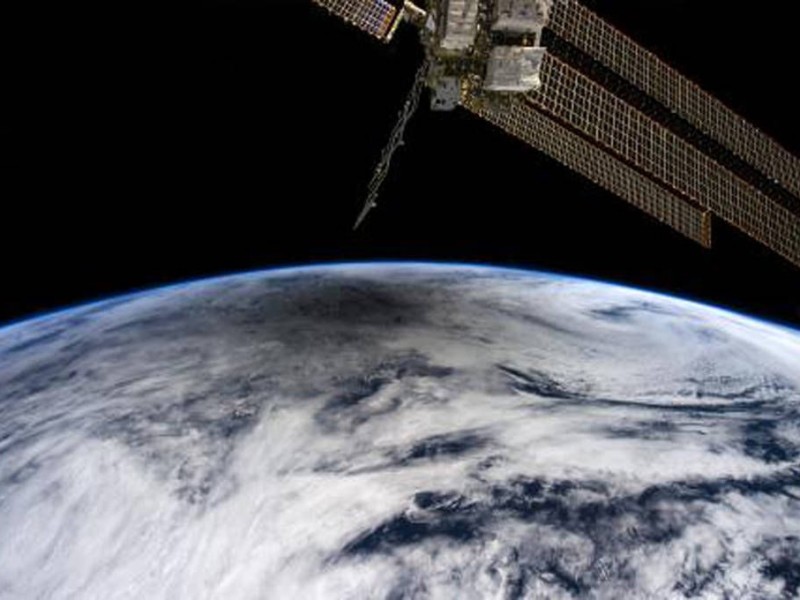
ALBANY — Even though they’re a natural occurrence, the rarity of eclipses, especially solar eclipses that bring night skies to the middle of the day, have inspired a multitude of myths over human history.
While the only real danger is eye damage that can occur by watching a partial eclipse without safety glasses, mankind over the centuries has concocted a number of superstitions to explain why the moon can turn blood red, as it does during a lunar eclipse, and the sun can be blotted out at daytime, as with Monday’s solar eclipse.
Though people have known since the 700s B.C. that eclipses are a predictable part of nature, that hasn’t kept stories from becoming attached to them, more often than not portending ill events. People over the centuries have beaten drums, yelled and made other noise to scare the evil spirits away, which, in their eyes at least, always seemed to work.
The Cassell Dictionary of Superstitions notes that eclipses frequently have been seen as some type of evil attempting to steal light from the earth, and the events have been seen as omens of the deaths of prominent individuals and rulers, including Nero and Henry VIII’s first wife, Catherine of Aragon.
Eclipses have been blamed for the start of the Bubonic plague in the 1340s and outbreak of World War I in 1914. And there is often a group that figures it’s a sign that the world is coming to an end.
An event like an eclipse can give someone power over those who are superstitious. Mark Twain captured that in his book “A Connecticut Yankee in King Arthur’s Court.” His character, Hank Morgan, finds himself sent back to the days of King Arthur and the Round Table. Merlin persuades Arthur to burn the strangely garbed American at the stake on June 21, 528, the date of a solar eclipse. Hank tells Arthur he’ll blot out the sun if he tries to kill him and, when the eclipse arrives, he bargains his way off the execution stake and into the second most powerful position in the kingdom.
While that was fiction, it borrowed from the historical account of Christopher Columbus, who was stranded in Jamaica in 1503. The native people welcomed him, but withdrew their charitable support after his crew cheated them and stole from them. In early 1504, Columbus consulted an almanac, saw a lunar eclipse was coming up and told the island chief his god was angered with his people’s treatment of Columbus and his sailors. A sign of the god’s wrath would be in shown by way an “inflamed” moon, Columbus said.
The natives were duly impressed when the lunar eclipse turned the moon dark red and begged Columbus to intercede on their behalf. Columbus, as the moon started to emerge from the earth’s shadow, announced he had forgiven the islanders for their inhospitablility, and relations were said to have improved thanks to his bogus magnanimity.
In a 2014 interview with The Albany Herald on the unusual series of lunar eclipses that were going on at the time, Dr. Baruch Halpern, Covenant Professor of Jewish Studies and professor of religion and linguistics at the University of Georgia, said the supernatural hold that events like eclipses and comets had on people began to erode around 720 B.C., when sky-watchers learned they could predict lunar eclipses.
“And that was a big moment,” he said. “The minute they were able to predict lunar eclipses, they figured out they also could predict solar eclipses.”
The math for predicting solar eclipses is much more complicated than for lunar ones, he said, and that was when astronomy and astrology started to diverge. The discovery that the celestial events, though rare in one particular location, were actually common and mechanical in nature, reduced their religious significance.
“People started denying the importance of eclipses around 700 (B.C.),” Halpern said, adding oracles, when they were consulted about future events, began saying eclipses were not an answer because they knew they were mechanical.
The superstitions hang around, basically, because people want them to.
“The eclipse loses a lot of its power because you understand it,” Halpern explained. “The eclipse keeps a lot of its power because there are people who still read their horoscopes. And there weren’t a whole lot of people involved in understanding astronomy, as there aren’t today.
“They know the heavenly motion is mechanical. They learn that in school. It’s something that sticks. At the same time, they read their horoscopes. Eclipses matter to people and are signs, yet at the same time anybody who really thinks about it knows they’re not.”
That dogged hanging-on even prompted NASA to post a page debunking a number of myths associated with solar eclipses.
“(M)any of the older ideas we had about the causes and effects of total solar eclipses have been replaced by detailed physical explanations,” the NASA page notes. “Nevertheless, some older ideas seem remarkably resistant to replacement by the more scientifically correct explanations.”
Here are some facts based on information on the NASA page:
A TOTAL ECLIPSE WON’T BLIND YOU: During a total solar eclipse when the disk of the moon fully covers the sun, the brilliant corona emits only electromagnetic radiation. A million times fainter than the light from the sun, there is nothing in the coronal light that could cause blindness.
A PARTIAL ECLIPSE CAN BLIND YOU: If you watch the sun before totality — and it will only reach 90 percent coverage in the Albany area — you will be exposed to the brilliant solar surface and that can cause retinal damage, though NASA says the typical human instinctual response is to quickly look away before any severe damage has actually occurred. Still, the safest way to watch, including in our area, is with safety glasses. You can see some brands and manufacturers at www.aas.org that have good reliability.
AN ECLIPSE CAN’T HARM YOUR FETUS: If you’re pregnant, your fetus’ safety isn’t a reason to skip the sky show. This myth is related to the false idea that harmful radiations are emitted during a total solar eclipse. No radiation is generated that doesn’t reach Earth every day.
AN ECLIPSE WILL NOT POISON PREPARED FOOD: This misconception also is related to the false idea of harmful solar rays being emitted during a total solar eclipse. NASA notes if that were true, that if food you prepare during an eclipse will be tainted, the same harm would come to the food in your pantry and crops in the field.
ECLIPSES ARE NOT OMENS: “A classic case of what psychologists call Confirmation Bias is that we tend to remember all the occasions when two things happened together, but forget all of the other times when they did not,” NASA says. “This gives us a biased view of causes and effects that we remember easily, because the human brain is predisposed to looking for, and remembering, patterns that can be used as survival rules of thumb.
“Total solar eclipses are not often recorded in the historical record, but they do tend to be recorded when they coincide with other historical events. For example, in 763 B.C. early Assyrian records mention an eclipse in the same passage as an insurrection in the city of Ashur, now known as Qal’at Sherqat in Iraq, suggesting that the ancient people linked the two in their minds. Or when King Henry I of England, the son of William the Conqueror, died in A.D. 1133, the event coincided with a total solar eclipse. With a little work, you can also find numerous cases when something good happened.”
YOU CAN SEE ECLIPSES AT THE POLES: NASA says there’s nothing unique about the North and South Poles from an astronomical standpoint. The last total solar eclipse viewable from the North Pole area was March 20, 2015. The last total solar eclipse viewable from the South Pole area was Nov. 23, 2003.
THE MOON DOESN’T TURN BLACK: The moon will be faintly illuminated from solar light reflected from the Earth, known as “earthshine.” While the Albany area will be dark with a 90 percent sun covering, most of the Earth’s surface will be in full sunlight and reflecting that back onto the moon. It’s similar to the faint light you can see on the dark part of the moon’s surface during a quarter-moon phase.
THE CORONA MAY NOT ALWAYS BE VISIBLE: There have been a number of accounts of total eclipses over the centuries, but NASA says the corona, a striking sight, was not mentioned until astronomer Edmund Halley’s description of the May 3, 1715 eclipse in which he referred to it as a “luminous ring of pale whiteness.” Even Johannes Kepler in 1605 mentioned the “red flames” visible around the rim of the sun, but didn’t mention any corona. “So, did the sun go through a thousand-year period of not having a significant corona at all?” NASA asks. “We may never know for certain.”
SOLAR ECLIPSES ARE NOT PREDICTORS: “This is a common interpretation found in astrological forecasts, which are themselves based upon coincidences and non-scientific beliefs in how celestial events control human behavior,” NASA says. “A common qualification is that if the eclipse doesn’t foretell a change in your life it may foretell a change in that of your friends. This is a logically flawed use of confirmation bias in which you prove a cause-and-effect relationship by ignoring failures and only consider successful forecasts.
“There is nothing other than human psychology that connects eclipses with future events in your life.”
A SOLAR ECLIPSE ISN’T EXCEPTIONAL: “(B)ecause they can be mathematically predicted across thousands of years, solar eclipses are a re-affirmation that there is a sublime clockwork regularity to the universe as Sir Isaac Newton admired over 300 years ago,” NASA said.
ECLIPSES DON’T INDICATE HEALTH PROBLEMS: A solar eclipse six months after your birthday or on your birthday are not a sign of impending bad health. A common belief among astrologers, that myth is only supported by confirmation bias. “There is no physical relationship between a total solar eclipse and your health, any more than there is a relationship between your health and a new moon,” NASA says. “Among a random sample of people, you may find such correlations from time to time, but they are outnumbered by all the other occasions during which your health was excellent.”
Related Articles

Southwest Georgia artists recognized at packed opening of exhibition
The annual juried exhibition, one of the region’s largest showcases of visual art, features approximately 46 artists and nearly 90 works spanning painting, sculpture, ceramics, photography and mixed media.

Powerful performances drive Theatre Albany’s ‘The Color Purple’
From the street, strands of purple ribbon wind around the white columns of the historic theater, hinting at the story waiting beyond its doors. Inside the foyer, a carefully curated slideshow flickers across a large screen, cycling through the faces of the cast. Some are seasoned performers. Others are stepping onto a stage for the very first time. Teachers stand alongside former students. Parents perform beside their children. People who worship in different churches, work different jobs and come from different corners of Southwest Georgia gather beneath the same lights to tell the same story.

The Worst Job in the Marines: Telling Parents Their Child Was Dead. It Was Also an Honor
Telling a family their child died in combat is something no one wants to do, but someone has to. Christopher Murphy described his service as a Casualty Assistance Calls Office as miserable but vital.

