
Leesburg native hikes the Appalachian Trail
Jake Moye completes a life-changing adventure
By Brad McEwen
LEESBURG — While he might have figured it would take him the better part of half a year to make the journey, Leesburg native Jake Moye had only an inkling of what it would feel like to finish his first-ever major hiking trip. To say completing the entire 2,189-mile northbound hike along the fabled Appalachian Trail was a lot of fun would be an understatement. Life-changing would be the better description.
“Overall, I received everything and more than I could have ever imagined from the trail,” said Moye during a recent long-distance interview as the 24-year-old adventurer settled into his new surroundings as a “liftie” at the Breckenridge Ski Resort in Colorado. “It was almost a magical experience. I could spend days talking about it.”
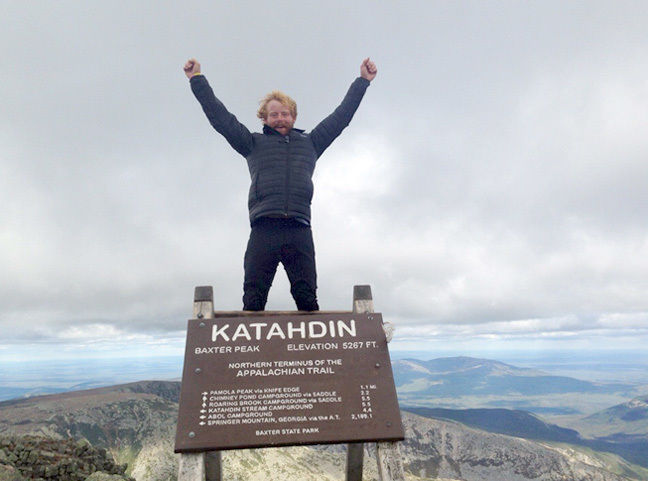
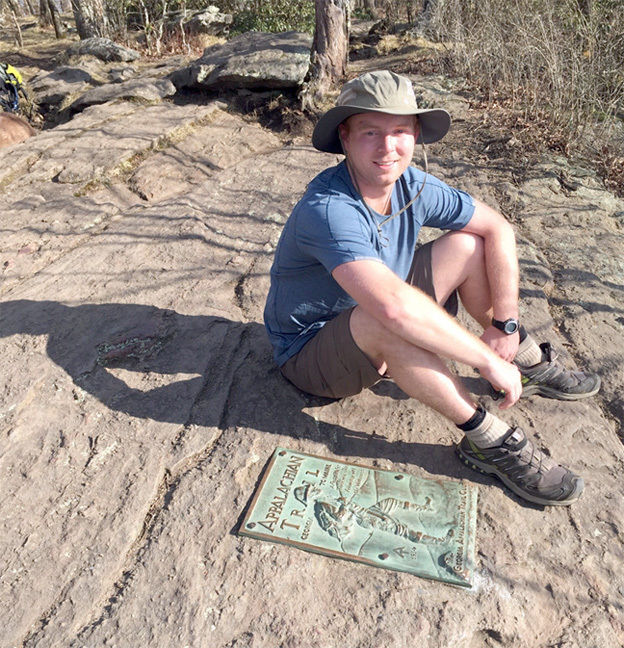
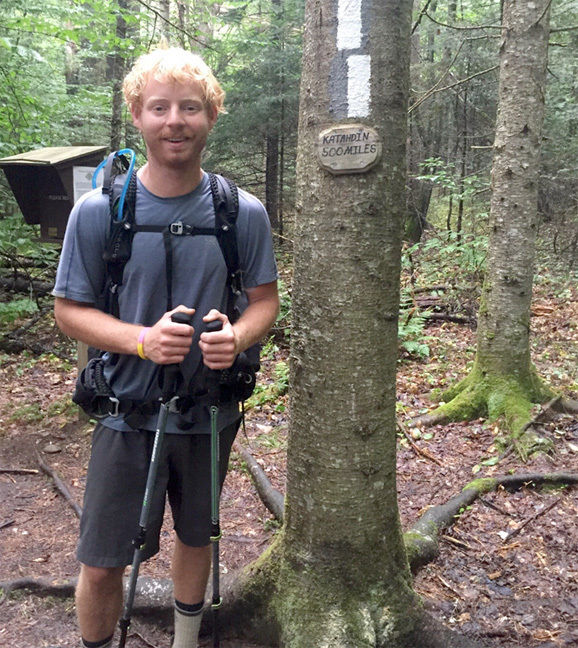
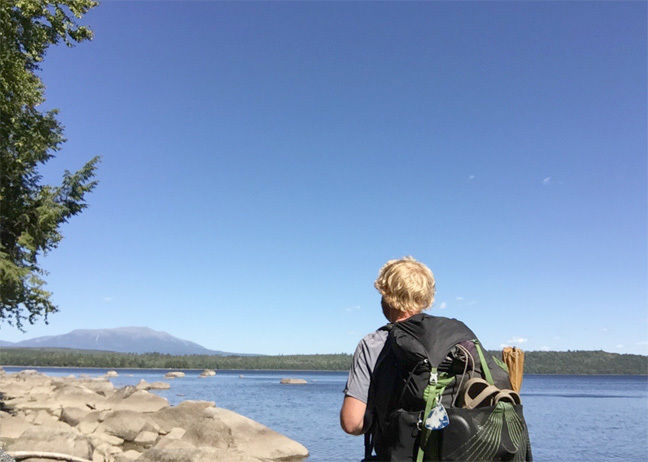
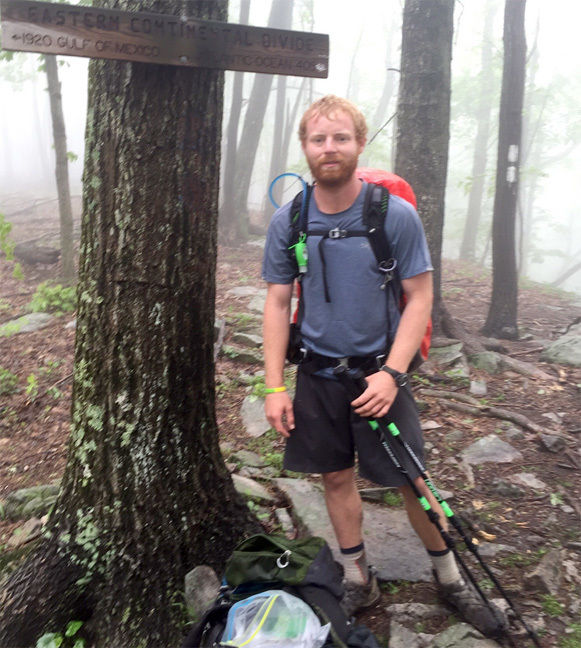
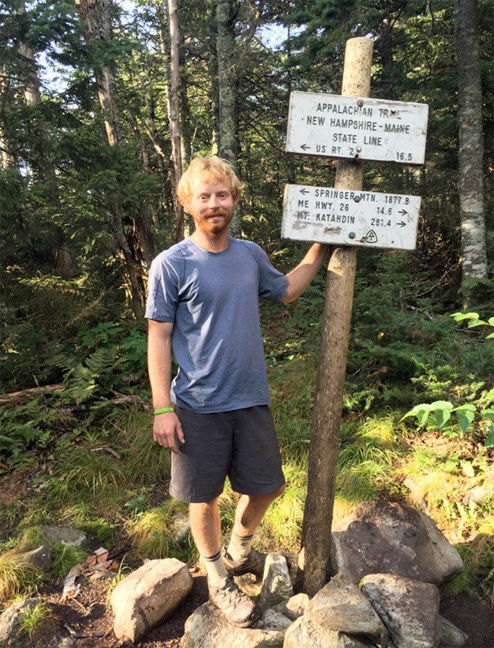
Days of talking would only allow Moye, a 2010 graduate of Lee County High School and a 2014 graduate of Georgia College and State University, to scratch the surface of what he experienced and learned during the 198 days he spent working his way up the east coast from the trail’s southern terminus at Georgia’s Springer Mountain, through 14 states, before finishing at the northern terminus of Mt. Katahdin in Maine’s Baxter State Park.
For most hikers that tackle an entire through-hike of the AT, as the trail is known to those in the hiking and outdoors community, making the journey, which calls upon a considerable amount of skill, is the culmination of years of hiking excursions, serving as a measuring stick-type challenge of ability.
“I feel like I had the idea of hiking the Appalachian Trail more so than just hiking,” he said. “Before leaving for the trail, I had not been on a significant hike, and many people I met along the way thought it was crazy that this was my first hike.
“I liked the idea that backpacking is basically being self-sufficient. I grew up active and had been staying busy out of college. I saw this as a way to bring back an athletic side I hadn’t had in years.”
Moye said that after spending roughly six months planning the trip and accumulating the necessary hiking and camping gear he’d need to survive in the wilderness — as well as convincing his mother and father, Joyce and Jeff Moye, that he was serious about making the trip — he was ready to set out.
“It was a hard sell to my family,” Moye said. “Once I began purchasing gear, my father became more confident. My mom was worried I wouldn’t make it, but I said, ‘Don’t worry, if I don’t make it I will be home in three days.’”
Moye finally hit the trail on a sunny morning March 10, leaving from Springer Mountain all by himself, prepared for the adventure ahead. Although he was prepared to make the trip solo, he soon realized that he’d likely have a good bit of company as he made his way north. According to Moye the AT has become very popular, with roughly 4,000 hikers attempting the northbound journey each year.
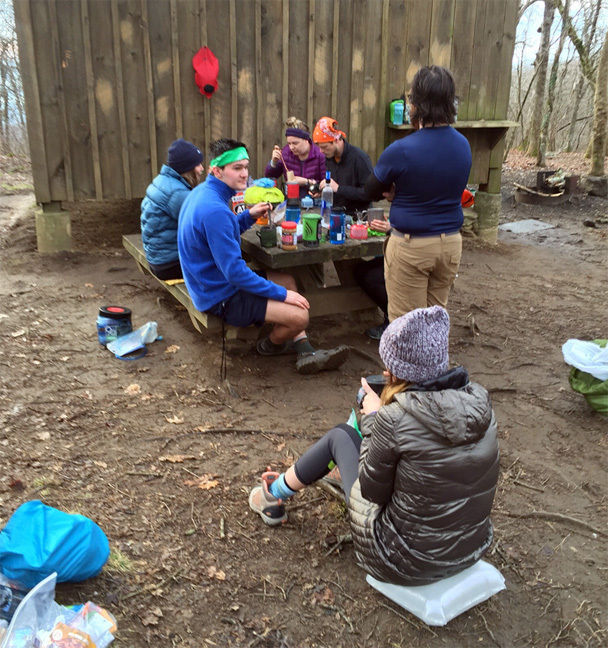
“I left for the trail solo,” he said. “I began hiking with a small group around Hiawassee, Ga. We later became known as the CAT CREW, and most of the members hiked together until Damascus, Va., around a quarter of the whole trail. In this group, five of the eight successfully completed the trail.
“We would often meet day-hikers and section hikers, and we always welcomed people to camp and to hike with us if they could keep up. I was with a group of at least one other person around 90 percent of my hike. I most often hiked with other through-hikers — people attempting the whole trail. There were a few people I hiked over 1,000 miles with and others I hiked 200-500 miles with. The best part for me was just being a part of the hiker and AT community.”
Along the way, Moye, who was given the trail name “Wahoo,” said he met people from all kinds of backgrounds from all over the world, including several people from Germany. Additionally he met various drifters who weren’t hiking, but rather living near the trail.
“The small town places we got to see were awesome,” said Moye. “Many of these places are not destinations you would normally travel to.
“In many of these small towns we would find locals that wanted to hear our stories and this often led to being invited into their homes for food, showers and beers. The trail seems to bring out the good side in people, whether that be giving something simple to someone or just smiling at them.”
Despite the steady companionship Moye enjoyed during his six-month trip, he also said he had plenty of time, either at night, alone in his tent, or on certain stretches of the trail, when he was alone with his thoughts.
“I consider hiking an emotional sport,” he said. “Hiking provides a person a type of solitude or clearness from distractions.”
While Moye had plenty to occupy his mind, it’s clear a good portion of this thoughts throughout the trip were focused on the essentials needed to complete the journey.
Moye said that while he was able to plan, in general terms, before he left, many things unfolded on the fly once he got out on the trail. For example, when he left he had taken a hammock, thinking he’d be able to do “a good bit of lounging” on the trail.
“It was sent home on day three,” he said. “The trail was much harder than I expected, and it is an all-day, everyday type of thing.”
Moye added that he also had to focus on his food and gear, and the constant juggling act of making sure he had enough food and water for any given section of the trail, while also making sure he wasn’t carrying too weight. Moye said beginners often carry too much food, arriving in towns with pounds of food in their pack, while more experienced hikers carry less, knowing exactly what they’d need for a given stretch.
“Towns were located two to five full days of hiking apart, and we would try to eat close to 3,000 to 6,000 calories a day, allowing up to two pounds of food per day,” explained Moye. “We were always looking 50 to 100 miles ahead on the trail. This way we could plan when to get to a town and the amount of food needed. Hiker hunger was real. There were times you would forget a food you needed or were craving and you would have to ration yourself.
“There were a few time I came into town with no food left in my bag. The only good thing about those days were the light weight of my pack due to no food. The same thing goes for water. Each liter of water weighs two pounds, and I would often sacrifice water for a lighter pack weight.”
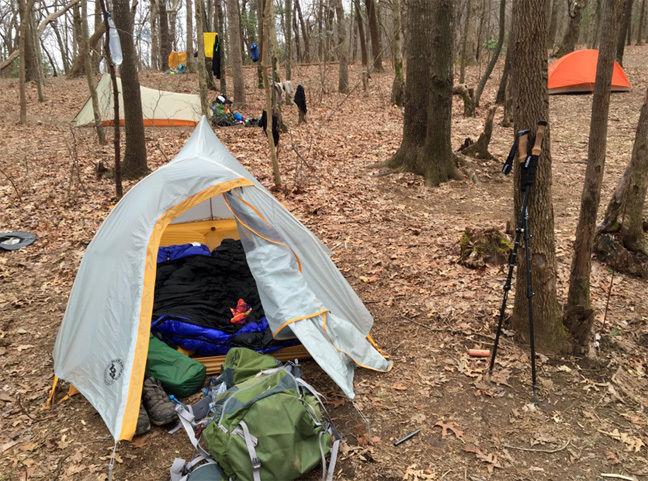
When he set out on the trip, Moye said he had his Exos 58-liter backpack filled with roughly 46 pounds of gear. By North Carolina, he had it down to roughly 35 pounds. By Tennessee, the pack weight was around 25 pounds with food and water. The lightest he got was around 17 pounds without any cold-weather gear.
In addition to needing to find stops along the trail to find foodstuffs, Moye said there were times when he also needed to get new gear, such as hiking shoes.
“I went through three pairs of trail runner tennis shoes, achieving 1,000 miles in one pair,” he said. “I bought the shoes in towns I went through. It was a popular brand and model. However, I once walked 200 miles in a pair that needed replacing so I could get to the next city that had them.”
Some of the stops along the way also afforded Moye and whatever companions he was with at the time an opportunity to maybe spend a night in a hotel, or to grab a shower.
Moye, who took a little cash and his debit card, said when he did stop for a night in a hotel, usually five to 10 hikers would split a room and take time to grab groceries and do laundry. They would also take showers, the lack of which Moye said took a little getting used to.
“You begin sweating within minutes of your first climb, and you still have eight-plus hours of hiking left,” said Moye. “Also there are periods you wouldn’t shower for four to six days. Getting used to the smells was something. You will only smell that smell on the trail.”
All told, Moye said he spent roughly $1,000 a month, mostly on food, laundry, gear and hotels, and that he was fortunate enough to be taken in a few times by six different families that lived near the trail.
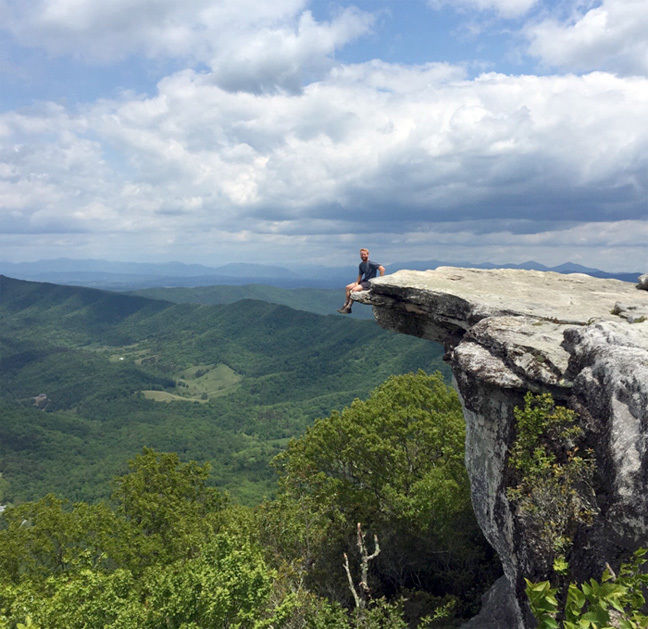
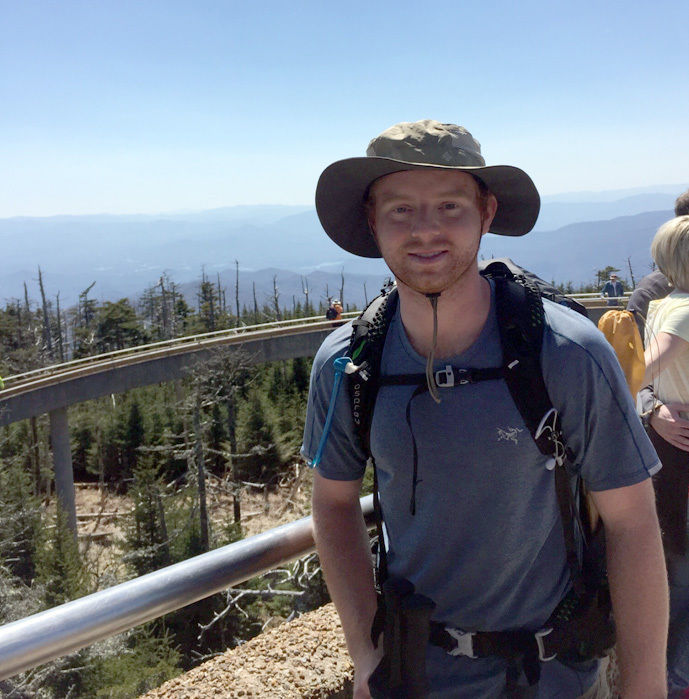
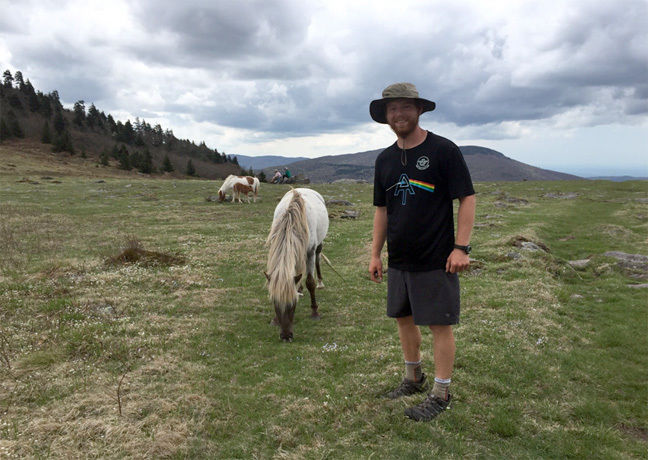
Moye said the highlights of his hike were the beautiful expanses of wilderness he experienced along the trail. A few of those highlights included the highest elevation point in his journey, Clingman’s Dome along the North Carolina/Tennessee border, deep in the Great Smoky Mountains, and McAfee Knob on Catawba Mountain in Virginia.
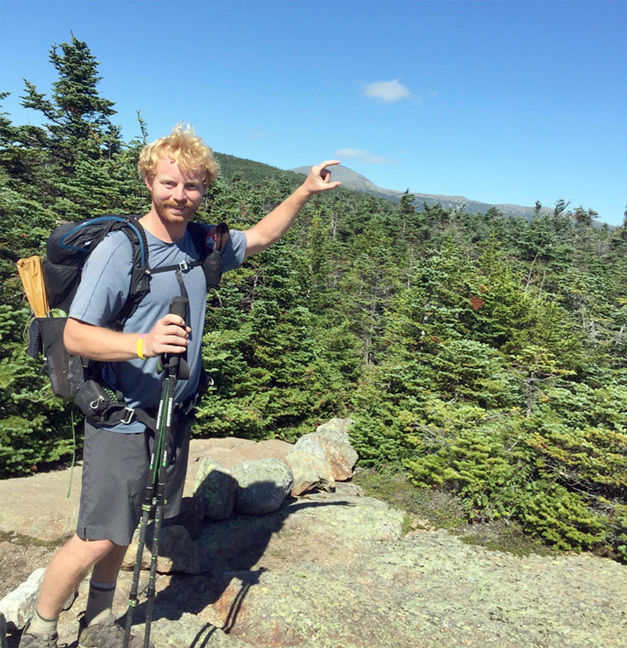
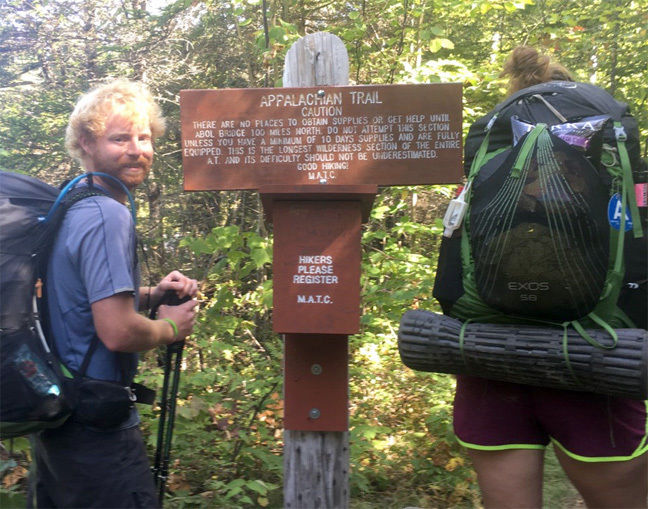
“My favorite area geographically is the White Mountains in New Hampshire and the 100 Mile Wilderness,” said Moye. “Those areas are magical.”
While Moye is still basking in the glow of his Appalachian Trail triumph, he’s already started a bucket list of future adventures he’d like to tackle now that he knows he’s got what it takes to survive in the wild for long stretches of time.
“I’m not sure what’s next in life,” he said. “I would like to hike Machu Picchu (in Peru), Half Dome (in Yosemite National Park), Mt. Denali (in Alaska’s Denali National Park and Preserve) one day. And the Pacific Crest Trail (a 2,650-mile trail from Mexico to Canada) has my eye as well.
“Everyone has the power to do what it is they want to, they just need to tell themselves that.”
Related Articles

‘Sounds Like a Mutiny.’ Secret Recording Exposes Claims of Toxic Leadership After a Marine’s Suicide
This week’s War Horse story follows the systemic failures before and after the death of Cpl. Drew Mobley who was the third in two years at Marine Corps Base Quantico to die by suicide.

Southwest Georgia artists recognized at packed opening of exhibition
The annual juried exhibition, one of the region’s largest showcases of visual art, features approximately 46 artists and nearly 90 works spanning painting, sculpture, ceramics, photography and mixed media.
Powerful performances drive Theatre Albany’s ‘The Color Purple’
From the street, strands of purple ribbon wind around the white columns of the historic theater, hinting at the story waiting beyond its doors. Inside the foyer, a carefully curated slideshow flickers across a large screen, cycling through the faces of the cast. Some are seasoned performers. Others are stepping onto a stage for the very first time. Teachers stand alongside former students. Parents perform beside their children. People who worship in different churches, work different jobs and come from different corners of Southwest Georgia gather beneath the same lights to tell the same story.
