
A grim future awaits area pecan farmers this year and beyond
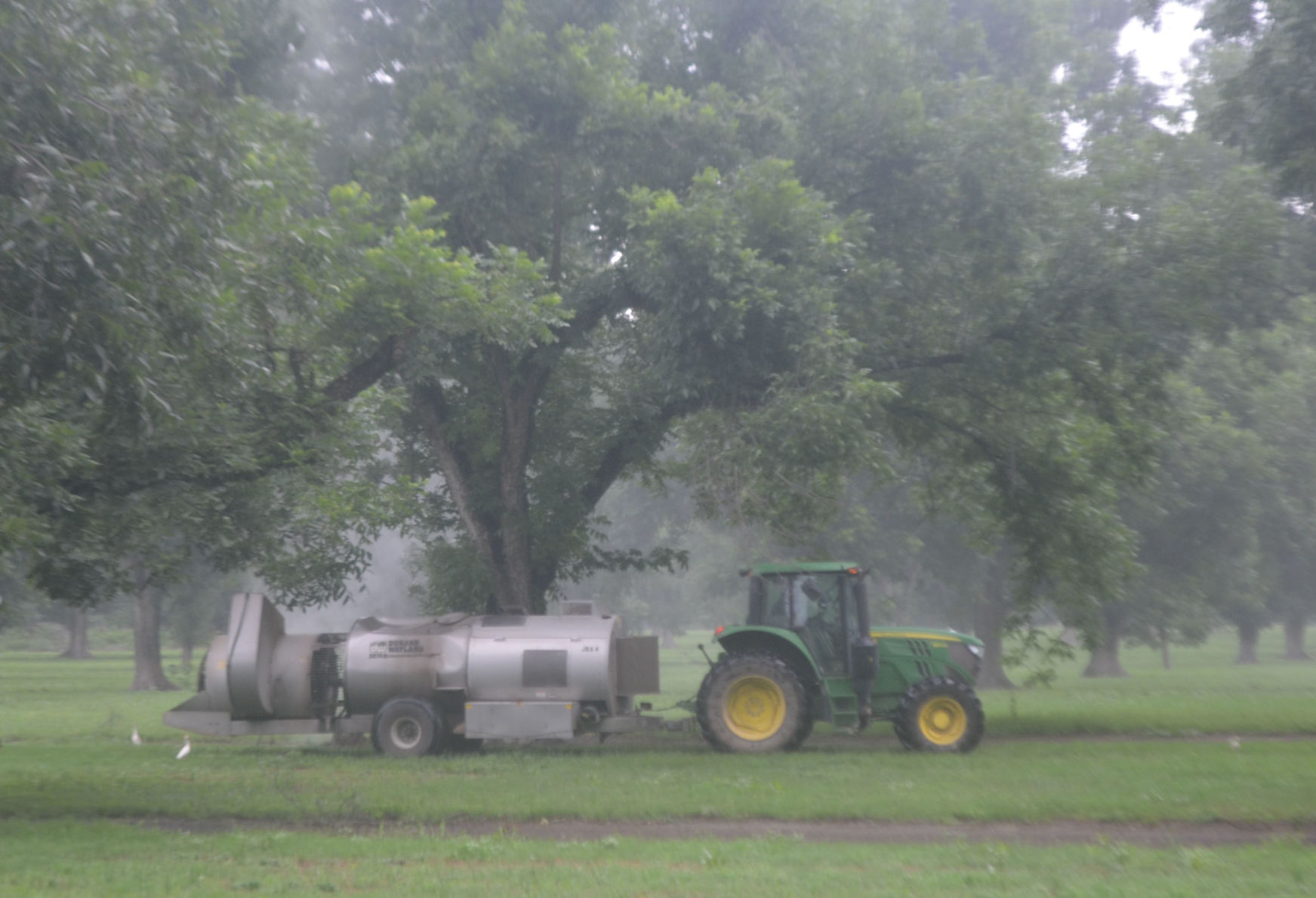
Staff Photo: Alan Mauldin
By Alan Mauldin
[email protected]
CAMILLA – Hurricane Michael was devastating to Georgia’s biggest industry, dealing an estimated $2.5 billion wallop to agriculture, including much of a bumper crop of cotton blown off the stalks.
The state’s pecan industry also took a big hit, and it’s not one that can be fixed by putting seeds in the ground in the spring to harvest in the fall.
The storm’s winds didn’t just take out the 2018 crop, it profoundly affected the industry for years to come.
Dougherty County was the state’s top pecan producer in 2017, with 16,500 acres harvested, accounting for $42.6 million in farm income, followed by $36.43 million in Mitchell County. Lee County was No. 5 with 10,500 harvested acres producing income of nearly $27.2 million.
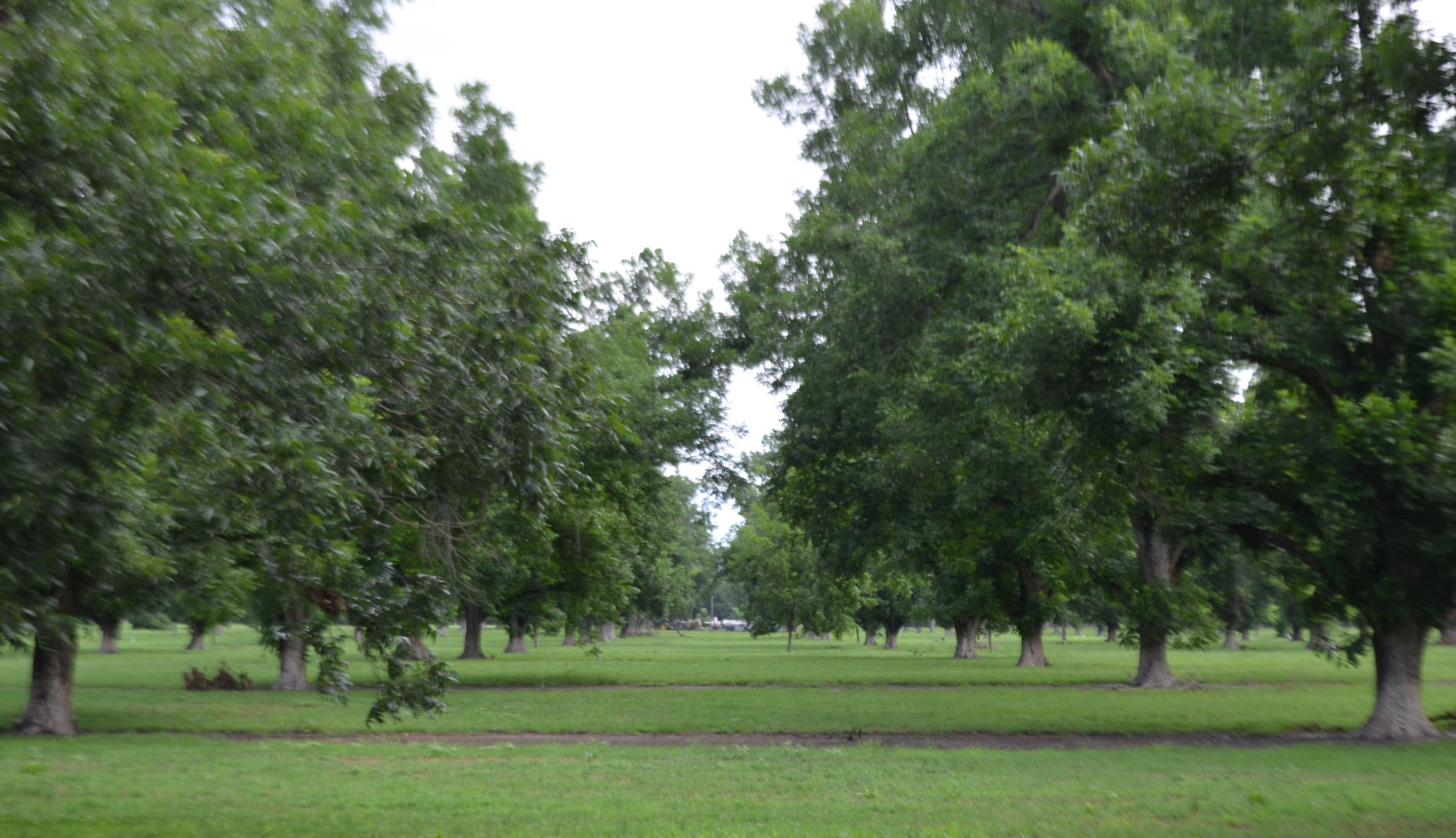
In the near term, the 2019 crop will be short in the areas most impacted by the hurricane, said Mitchell County pecan grower James Lee Adams. As he drove by a grove of his trees with a reporter, Adams pointed out limbs bare of pecans on his farm in Mitchell County.
“You look up and you don’t see any nuts,” he said. “Right about now, you should be seeing nuts on them.”
Buds were scarce on the trees this year and they fell off early, he said.
Growers also lost drip-irrigation systems, as uprooted trees ripped up underground water lines or they were damaged during cleanup of groves, Adams said.
“It was catastrophic and beyond comprehension,” he said. “The effects are going to be much more than we ever dreamed.”
Losses in Georgia for 2018 were estimated at about 60 million pounds, from an estimated yield of 120 million pounds pre-Michael to about 63 million pounds actually harvested, said Lenny Wells, a University of Georgia associate professor and extension horticulture specialist for pecans.
Direct losses to pecan growers for 2018 were estimated at $100 million for lost production and $260 million to trees, with another $200 million estimated in future income lost due to the damage.
“The number I’m going with right now is 60 million pounds (in 2019), basically what we had last year. “We’ve never had one (hurricane) in Georgia. When you look at Alabama, Mississippi, they’ve had storms like this. The year after the storm, you don’t have very much production. The year after that, you see a rebound.”
It will take growers years to reach the level of pre-storm production, however. The loss from downed trees and lost tree limbs was equivalent to a loss of about 17% of total acreage.
Newly planted trees take about half a decade to begin producing nuts and, depending on the variety, about 25 years to reach peak production.
“You’re looking at at least five years to have anything to harvest,” Wells said. “And probably 10 years before you’re making money off of it. It’s a big investment . There’s no shortcut to growing pecans.”
Some newer varieties of trees seem to be weathering the storm better than older ones, Wells said, and younger trees seem to have suffered less stress than older groves.
The good news is that the rebound will begin next year. New Mexico looks to take the crown as top pecan producer for 2019, but Georgia’s time at the No. 2 spot — barring another hurricane — won’t last long.
“I think we’ll be back at the No. 1 spot again, possibly as early as next year,” Wells said.
For now, though, many pecan growers who were in Michael’s path do not have much to look forward to, Adams said.
“This year’s crop was on those trees in an imperceptible form” at the time Michael hit, he said. “I’m concerned for how long it’s going to take for those trees to come back. For this year, forget it.”

Author

Related Articles

Albany recycling center enacts material separation rule
Mixed items will no longer be accepted at the Albany recycling center at its 2521 Meredyth Drive facility. Individuals will now be required to separate items befor they will be accepted.
Albany City Commission takes action on proposed downtown hotel, two theater renovation projects
“We’re taking the original building back to, hopefully, it’s glory days. One of the cool things about the project is we are going to restore the balcony. It’s going to have a balcony, so it’s going to be super cool.”
Dawson’s $10.2 million sewer project leaves major financial questions unresolved
As Dawson’s finance director resigns and operating pressures mount, records show $10.2 million in sewer funding, frozen loans, missing audits and gaps in the public accounting of project money.
