
Farmland key element of microbrewery project
Dr. Tripp Morgan’s Pretoria Fields project beneficial for city and county
By Carlton Fletcher
ALBANY — In the aftermath of Dr. Tripp Morgan’s announcement of his plans to build a microbrewery in Albany’s downtown district, the primary focus has been on the brewery itself. But another major component of that project is already under way some 10 miles west of downtown.
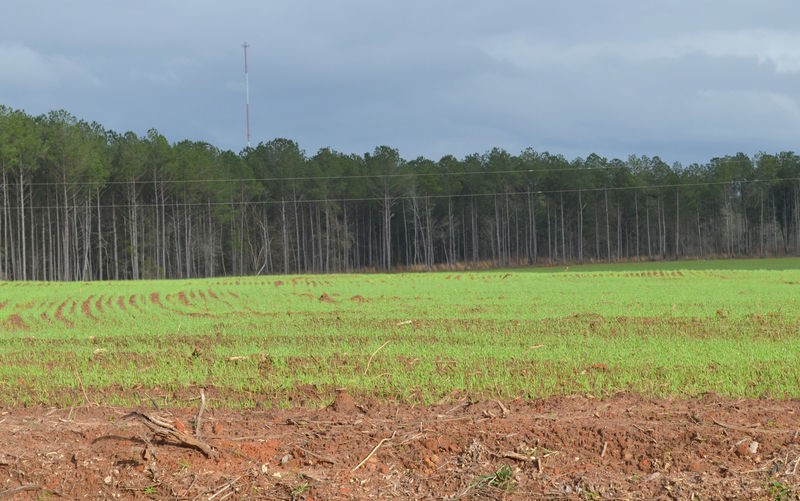
Acres of wheat, only recently bursting through the soil on farmland purchased by Morgan in southwest Dougherty County, are being tended by employees of the Pretoria Fields project, setting the stage for an organic farming operation that will encompass more than 400 acres in Dougherty, Lee and Mitchell counties.
That wheat will be sold, perhaps to a local partner, as progress on the microbrewery moves forward, but it — and other crops grown on the land — will be used in the production of craft beers once the brewery is operational.
“This land will be the flagship for our organic farming operation,” Albert Etheridge, a spokesman for Morgan, said last week. “Nothing has been grown on the Dougherty County land for several years, so it will be all natural from the start. It’s a three-year process, but we will eventually convert all of the farmland in Lee and Mitchell counties to organic as well.
“We’re focusing a lot of our attention on developing the microbrewery downtown right now, but the farming portion of our operation is an important part of the overall project. We’ll most likely try to find the right local partner to sell the crops to until we’re ready to start using them in the brewing process. I would think there would be interest in the retail market, from a grocer, a baker or some other business looking for organically-grown produce.”
While wheat, which will be one of the primary ingredients used in the production of Pretoria Fields beverages once the microbrewery is operational, is currently being grown on the majority of Morgan’s Dougherty County farmland, Etheridge said blackberries, mayhaws, watermelons, raspberries and “all kinds of fruits and vegetables” will eventually be added to the crop list.
Morgan has gained renown in the medical field as a vascular surgeon, but he is no stranger to farming. He worked on family farmland while growing up and was, according to family members, “actively involved in showing cattle” while in school.
“Tripp’s background had a lot to do with this plan to build the microbrewery,” Etheridge said. “He’s from this area, has a background in farming and it’s remained a part of his family’s business. It’s something that’s in his blood.”
When Morgan initially announced plans to build a microbrewery on 29 acres of the Dougherty County farmland he’d purchased, it stirred up a storm of controversy as plantation owners in the area challenged the plan to rezone the land from agricultural to retail. Several attended public hearings before the Albany-Dougherty Planning Commission and the Dougherty County Commission, proclaiming the plan would, among other things, harm the delicate ecosystem of quail habitat in the region and lead to a “domino effect” of retail businesses locating in the region.
Dawson lawyer T. Gamble represented the interests of Pine Knoll and White Hill plantations at the public hearings. He said Tuesday his clients were satisfied with Morgan’s latest plans.
“If you’ll remember, my client (Pine Knoll Plantation owner) Libby Hall was the first person to publicly recommend that Dr. Morgan build the microbrewery downtown,” Gamble said. “So, yes, I believe the folks in that area are happy to see the farmland being used for its intended purpose. And I don’t think there’s any concern at all that the operation will include organic farming.
“I’m still puzzled, though, about the county changing their entire zoning structure for this one project and then the decision being made to move the project downtown. That just didn’t make sense.”
Gamble’s reference is to a vote by the Dougherty County Commission to allow more farm-related “agribusiness” uses on AG-zoned property without the owner having to go through the rezoning process.
But Commission Chairman Chris Cohilas said Wednesday that Gamble’s comment about commission action was not an accurate representation of the board’s intent in passing the ordinance.
“Unfortunately, that is a misinterpretation of our intent,” Cohilas said. “What Dr. Morgan’s request did was afford us an opportunity to take a look and see if our zoning, as it applies to agriculture land, was as progressive as it needed to be. It was difficult to understand why, based on our ordinance — which was written God knows how long ago — someone could put a chicken house on county property but couldn’t create a crop-to-can-type operation.
“Under the pre-existing ordinance, you couldn’t have a pumpkin patch, a hayride or a winery on property zoned for AG in the county. Farmers here couldn’t do things to maximize the value of their land that were allowed in counties all over the state and the entire country that were either more progressive or simply didn’t have prohibitive zoning.”
Cohilas said the eventual decision made by the County Commission may have been sparked by Morgan’s rezoning request, but it was not made specifically to appease him.
“I see this decision as a pro-agribusiness decision,” he said. “I’m proud of the commission for tackling the issue and making a decision that goes back to the root issue of farmland usage.”
Both Cohilas and District 1 Commissioner Lamar Hudgins, in whose district Morgan’s farm operation is located, lauded the outcome of the microbrewery project.
“Certainly government can’t ensure the success or failure of a business, but it can create an environment that is conducive to that success,” Cohilas said. “I believe the collaborative effort of county and city leaders and of the Albany-Dougherty Economic Development Commission to facilitate the discussion created a project that will allow for economic development not on just one front, but on two. I certainly hope the outcome will be a successful one.”
Hudgins, the longest-serving member of the commission, agreed.
“I think this project created a lot of good opportunities in Dougherty County,” he said. “I think the brewery is going to be good for downtown, and I think everyone agrees that the farming operation in the county is a good thing. I also am pleased that the county agreed to the agritourism element in zoning that will enhance our farming operations. We were one of the few counties in the state that didn’t allow this.
“Sometimes things like this happen in a roundabout way, but they usually work out for the best. It’s like that old saying: ‘If you like law and sausage, you shouldn’t watch either one of them being made.’”
In addition to the wheat shown here, officials with the farming operations of Pretoria Fields say they will also grow blackberries, raspberries, watermelon, mayhaws and barley. (Staff Photo: Carlton Fletcher)
Author

Related Articles

Dougherty Jail graduates first class of female GED recipients
“It was an escape. I can say this has been challenging. I want to express my gratitude for being able to attend this program.”
From cotton to cloud: In the data center debate, is rural Georgia once again being asked to carry the cost?
Across much of rural Georgia, the abandoned cotton warehouses and shrinking tax bases remain — enduring reminders that industries built to serve distant markets do not necessarily stay rooted in the communities that first sustained them.
Dawson Council approves $400,000 lifeline in emergency meeting as financial accountability remains elusive
Less than a week after city officials publicly acknowledged the City of Dawson cannot continue operating without additional financing, the Dawson City Council convened a hastily called emergency meeting Tuesday evening and unanimously approved authority to borrow up to $400,000 through a tax anticipation note.
