
Albany officials getting blight blowback from property owners
Patricia and Steve Kalka vow to contest an abatement petition hearing in Municipal Court
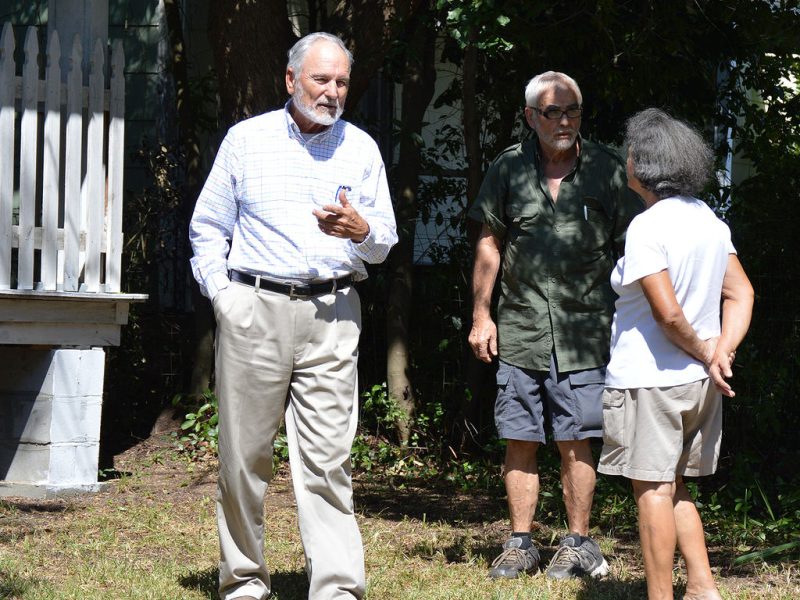
Albany City Attorney Nathan Davis, left, and property owners Steve and Patricia Kalka discuss an abatement petition on the Kalkas’ property on the 500 block of Eighth Avenue. (Staff Photo: Terry Lewis)
By Terry Lewis
ALBANY — Once a month, Albany City Attorney Nathan Davis’ office presents the city’s Municipal Court with between 10 to 15 abatement petitions in regard to blighted properties. The properties can either be repaired by owner or demolished — usually the latter option.
Of the 14 petitions heard last month, 12 were ordered demolished and just two property owners took advantage of the repair option.
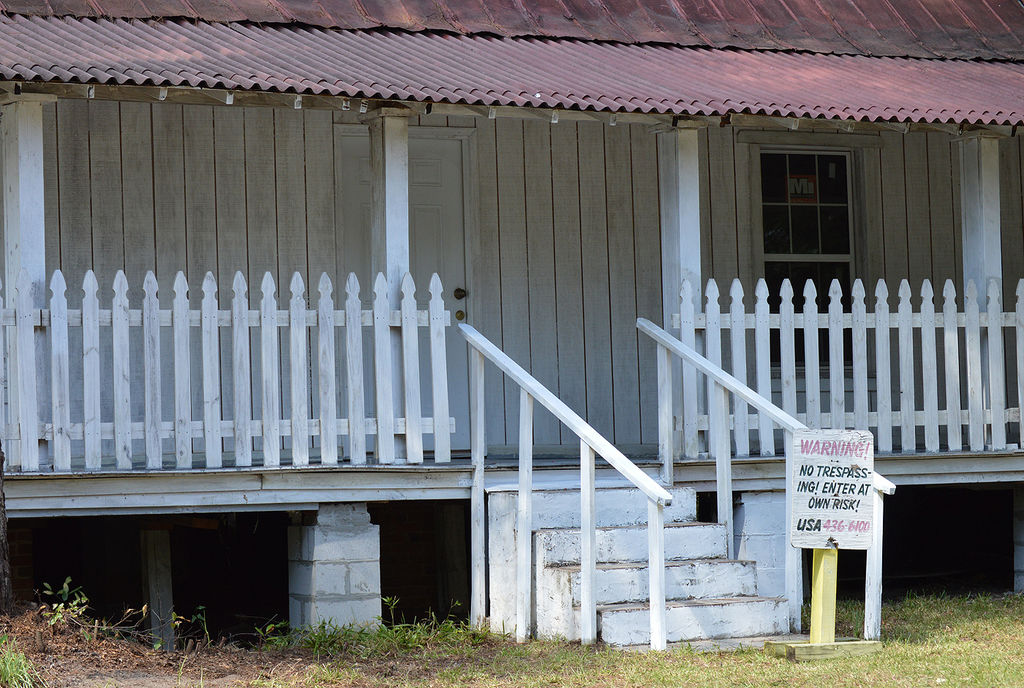
Most of the hearings go smoothly, but that’s not likely to be the case today when Olympic Flame restaurant owner Patricia and Steve Kalka go before either judge Willie Weaver or Ralph Scoccimaro to determine the fate of one of the Kalkas’ properties in the 500 block Eighth Avenue.
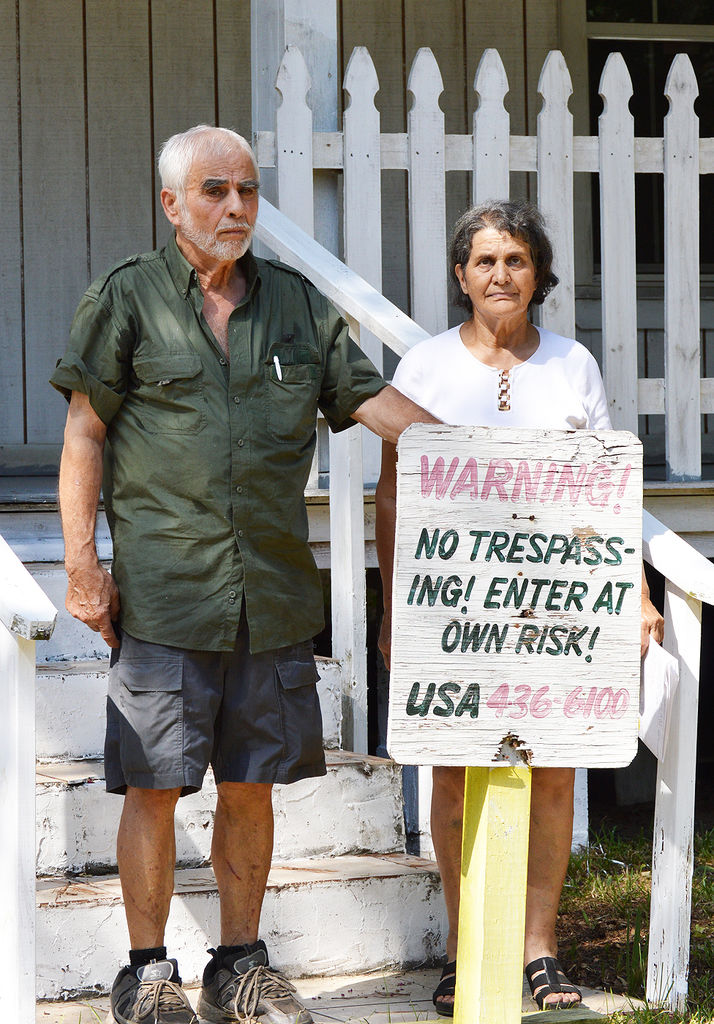
“They are trying to put my house down, and I’ll go to City Court, State Court and Superior Court to keep that from happening,” Kalka said Tuesday. “We pay our taxes. This is discrimination, and I plan on suing the city for $5 million because these people have to pay a price.”
The Kalkas’ already had a bone to pick with city planners. When they tried to move the Olympic Flame from the east side to the west side of North Slappey Boulevard in 2012, the couple became embroiled in a fight with the contractor who was installing the new restaurant’s stove and hood venting.
“He took our money and did not finish his work,” Patricia Kalka said.
So for the past three years, the restaurant has had an “OPENING SOON” sign in front of the building. Steve Kalkas also blames the city Planning office for the lengthy delay, because, he said, “I didn’t give them any money.”
Davis said he can understand the couple’s frustrations, adding he knew nothing about their dispute with the Planning department, but noting that “They’ve had ample time to deal with the issues on the Eighth Avenue property.”
That process, Davis said, is clear, well-defined and does not happen overnight.
“We get files from code enforcement, we probably have about 100 of them right now. We look at it and see what they say, like what type of structure and code (enforcement)’s recommendation,” Davis said. “We are required to give the property owner a written document of what the files contend, and the property owner is given a petition to abate the nuisance in Municipal Court.
“We are required to present in court evidence to support the petition, about dilapidation and possible demolition. As part of the process, the property owner can not only cross-examine to city’s witnesses, they may testify themselves and enter any sort of documents they care to put in under state law and the city ordinance.”
What happens after that, Davis said, is up to the judge.
“The judge will make a decision as to whether the property is or is not dilapidated,” the city attorney said. “There is evidence as to the value of the structure only; there’s evidence from the city side as to what it would cost to rehab the property. If the court determines it’s not reasonable to spend that much money on a structure that is only worth X amount of dollars, the court can order a demo.”
And this is what Kalka is aiming to avoid.
“I have 46 properties total in Albany, but they pick this one to put down?” Kalka said. “I pay property tax on all 46. I have 20 on this road. It’s not right.”
The Kalkas, Davis said, are not being targeted. So who makes the decision as to which properties go before the court.
“We just pull them off the shelf. We just random(ly) pull the files. We don’t look for a particular address or a particular area of town,” Davis said. “We just pull them off the shelf as we get them.”
If a property is slated for demolition, the owner can bring in his own crew to take down the structure or the city will take the building down and bill the owner. If that bill is unpaid, then the city will place a lien on the property.
Davis said the city has a goal of bringing as many as 150 property owners a year before the court.
Related Articles
Dawson Council approves $400,000 lifeline in emergency meeting as financial accountability remains elusive
Less than a week after city officials publicly acknowledged the City of Dawson cannot continue operating without additional financing, the Dawson City Council convened a hastily called emergency meeting Tuesday evening and unanimously approved authority to borrow up to $400,000 through a tax anticipation note.
Dawson approves $68K excavator purchase after months of contradictory public statements
The decision concludes one portion of a controversy that has generated months of public scrutiny but leaves several unanswered questions regarding how the city’s original machine was damaged, whether employees were held accountable and what documentation supports the decision to replace rather than repair it.
Dawson proposes borrowing up to $420,000 to stay afloat as finances unravel
Documents obtained by The Dawson News show city officials are proposing to balance the budget through a transfer from the Public Utilities Fund while simultaneously seeking authority to borrow as much as $420,000 from a private financial institution to continue meeting payroll and other operating expenses as Dawson works to complete financial audits that have remained unfinished since 2023.
