
Grandparents targeted in phone scams
Social media can be source of information to aid scammers and other thieves

By Jim Hendricks
ALBANY — A phone scam in which grandparents are being targeted has resurfaced in the Albany area, with one local resident saying a scammer tried to get money from him twice.
The scam, while conducted on the phone, is similar to ones on email in which the sender appears to be someone the recipient knows. The email scammer will typically be out of town — often out of the country — and in need of immediate financial assistance after being robbed, arrested or injured.
The Albany man, a grandfather who asked that his name not be used because he was concerned about more targeting, said he received a phone call this week from a man purporting to be his grandson, who resides in Florida. The caller said he’d been in a traffic wreck in which his nose had been broken — the grandfather said he thought it was an attempt to cover for the fact the caller’s voice sounded different — and he needed money to repair his car.
Even though the scammer called the man by the term his grandchildren use, the Albany man was suspicious. He’d gotten a similar call earlier this year.
“Six months ago,” the grandfather said, “I got a call and he said, ‘Do you know who this is?’ I said, ‘You sound like my grandson.’ He sounded like my grandson with a cold.”
That time, the caller said he and a friend were in Mexico and had been arrested. He needed his grandfather to send him money to pay his fine. Then, he made a telltale slip.
“He called me ‘grandpa,’” the Albany man said. “My grandchildren don’t call me grandpa.”
He called his daughter in Florida to check on his grandson. “She said, ‘No, he’s not in Mexico. I’m looking at the back of his head right now.”
Had the erroneous reference not occurred or his daughter been unavailable to confirm his grandson was not in trouble, the grandfather said he would have cabled the money as requested.
When he got the call Tuesday asking for the repair money, the scammer had done more homework, adding the Florida location and calling him by the actual name his grandchildren use. That quickly became a much more derogatory term when the grandfather said he told the caller he knew it was a scam.
“For those people with grandchildren living outside Albany, they need to be careful about people calling and pretending to be grandchildren and saying they want money,” he said. “It’s a scam.”
And it’s one that Capt. Craig Dodd with the Dougherty County Sheriff’s Office says is both common and usually aimed at senior citizens, particularly widows.
“These people are despicable,” Dodd said. “They target widows, especially older widows. They (the criminals) don’t care if they’re taking someone’s life savings, money left for the wife to live on after the husband has died.”
Many of the scammers aren’t in the United States, regardless of what number may show up on caller ID. Ironically, the one true statement on occasion is that the caller, while not a relative, actually is in jail. Those who are stateside running the scams are, Dodd said, quite often in prison, using illegal cell phones to generate money to pay off in-prison debts to other inmates.
“The sheriff (Kevin Sproul) and I both go around and give talks to senior clubs, church groups and others on how to avoid becoming a victim,” Dodd said. “We’re more than happy to do it.”
That is what it takes to avoid this type of victimization, Dodd said, noting many have an inaccurate view of what law enforcement can do, largely fueled by television police procedurals in which complex crimes are solved quickly, often with the aid of state-of-the-art technology that is widespread only in fictional TV shows. He noted one case he worked in which a victim wanted him to prove her husband had tossed a cinder-block through the window of her home by using a laser like one she’d seen on a TV cop show to get prints from the block.
There are two of those lasers in the state of Georgia, Dodd said, and it was beyond unlikely that one would be transported to Albany to attempt to lift fingerprints from a cinder-block.
“People look at these TV shows and they see these crimes solved in 45 minutes,” he said. “That just doesn’t happen.”
The vast majority of the time when police or other law enforcement is called in, the crime has been committed. There are times that officers get tips in time to catch the criminal in the act, but “nine times out of 10 we get there after something happens,” he said.
To avoid being a victim of a scam — whether by phone or email — or physical theft, an individual needs to be proactive in taking steps to reduce exposure and risk, Dodd said.
One way is to be careful with social media. Many people have a tendency to bare their souls — and provide extensive personal information about themselves and others — to millions of strangers who see it on sites like Facebook, Twitter, Instagram and others.
And just because an individual doesn’t “do” Facebook or Twitter, that doesn’t mean his or her information is safe from prying eyes. The grandfather who called The Herald, for instance, said he doesn’t even turn on a computer these days, but that doesn’t mean social media wasn’t mined to learn facts about him that the scammer used to try to instill trust.
Taking the case of a hypothetical victim who is a grandparent and finds the caller knows a lot of personal information about him, Dodd said, “They (the criminals) could have gotten it off a grandson’s or a daughter’s website where someone referred to him as grandpa or granddaddy or whatever.
“If you have a daughter or granddaughter away at college and she refers to her grandma so-and-so and uses grandma’s name on her website, they have exposed grandma. People will put pictures of their house on there or pictures of grandma’s house and suddenly they (the scammers and thieves) know grandma’s living alone.”
Tracking down “grandma” at that point isn’t difficult. Scammers use extensive social media sites to find out things about their intended victims, especially in an era known for its TMI — Too Much Information — sharing.
“People will put their doctor’s information on it, things that are going on with the family, just everything,” Dodd said. “Some people just get really carried away with it. And there are people all over the world who are looking at it for hours and hours and writing the stuff down. They’re just giving away all their personal information.”
Individuals with social media accounts know how common it is for many of those they stay in touch with electronically to update what they’re doing, including posting photos of their vacations and other travels, and showing off the new things they have purchased. Those types of real-time posts invite more than scammers. Thieves are adept at social media mining as well.
“Photos while you’re away on vacation, you’re just saying, ‘Come on, break into my house,’” Dodd said. “Pictures of the new stereo you just put in your car. Guess what? Now it’s gone. People have to realize we don’t live in a pristine America anymore. Things have gotten bad in the way of crime, and we (law enforcement) can’t be everywhere all the time.”
The best defense against theft — physical or electronic — is to lock up possessions, including information.
For instance, the simple act of locking a house or a car deters crime, he said. There are cases in which people leave wallets, purses, computers, guns, cell phones, personal papers — Dodd once even found a stack of credit cards bound with a rubber band that a thief missed when he stole a gun from an auto — in unlocked vehicles. Some argue they don’t lock their autos because they don’t want the thief to break a window, but Dodd said most thieves don’t go to that trouble. Unless they see a gun or wallet lying on a seat, they’re going to try the handle and go to the next auto, looking for one that’s unlocked.
“People have got to protect themselves as much as they can,” he said.
Likewise, those who want to share on social media can take steps such as waiting until they have returned from vacation to post the out-of-town photos they shot.
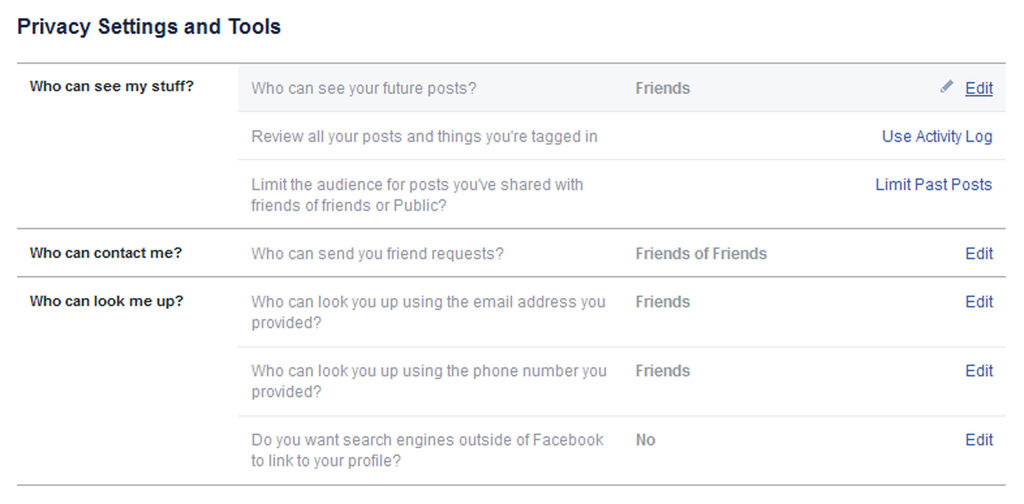
And those using social media should use the privacy settings available to restrict the people who can see their information to people they know, Dodd said.
“What people don’t do, unfortunately, is they don’t lock out all the others,” he said. “People can come in and view everything they have. Stuff you put up for the public domain, make it very restrictive.”
Dodd said organizations in the community can contact the DCSO if they’d like to get someone with the sheriff’s office to talk with their group about reducing the chances of becoming a victim of a scam or theft.
“Any crime that we can prevent by educating, we’re happy to do it,” he said.
Related Articles
Dougherty Commission considers $104 million budget for 2026-2027 budget year
“The other side of the coin is you could have higher revenues than projected. We’re very conservative in budgeting revenues. That also reduces the need to use fund balance”
Albany police investigate suspicious Sunday death
A 21-year-old Turner Job Corps student who was found unresponsive on Sunday evening was later pronounced dead at Phoebe Putney Memorial Hospital. The death is under investigation.

James Rubino installed in new role at Marine Corps Logistics Command in Albany
James L. Rubino recently assumed the role as executive deputy of Marine Corps Logistics Command in Albany. In his new role he will oversee integrated logistics support.
