
New Florida cases potential ‘game-changer’ for nation and Southwest Georgia
Health officials in Florida have found 14 Zika cases that were acquired locally
By Jennifer Parks
ALBANY — There was a possible change in the game regarding the Zika outbreak after 14 cases in south Florida were found to likely have been acquired locally rather than through travel.
“It is a game-changer, I think (in Southwest Georgia) as well as nationally,” said Jacqueline Jenkins, epidemiologist with the Southwest Public Health District.
The Florida Department of Health said Monday that enough information had been gathered as part of its ongoing investigation into non-travel-related cases of Zika in the Miami-Dade and Broward County areas to conclude that a high likelihood exists that the cases are the result of local transmission — meaning they were likely caused from mosquitoes in the region rather than overseas.
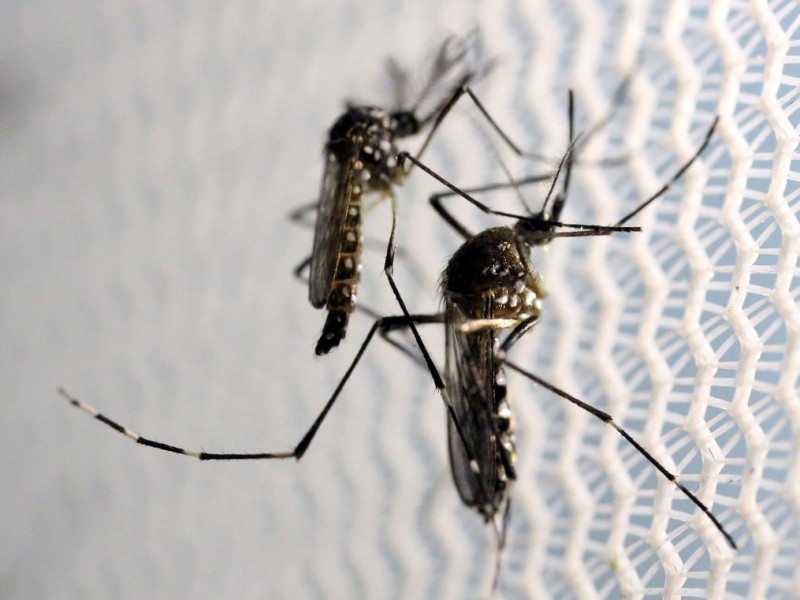
The cases are likely the first to be locally transmitted in the continental United States. Zika is transmitted primarily through the bite of the Aedes aegypti or Aedes albopictus mosquito, both of which are found in Georgia and Florida.
In Southwest Georgia, an individual has been dedicated to trapping pools of mosquitoes to see how many of the possible carriers are in the region and making sure the spraying efforts reflect the need, Jenkins said.
The Georgia Department of Public Health has been actively engaged in an awareness campaign that has included letters regarding Zika being sent to state travel industry professionals, park officials, educators and faith leaders. Banners have also been set up at the Hartsfield-Jackson International Airport, a primary entry point for travelers into Georgia, and community and personal protection campaigns have been established to help prevent Zika’s spread.
Jenkins said that Georgia has yet to have a local case, but that Tip n’ Toss — a campaign to educate people on standing water — is still ongoing. As of July 22, there were 46 confirmed travel-related cases in Georgia. The state’s first sexually transmitted case was reported in May.
The Centers for Disease Control and Prevention said that, as of Wednesday, there had been 1,657 Zika cases in the U.S., with the territories reporting 4,729 local cases and 21 travel-related cases. The agency still has travel notices for the Caribbean, Central America, the Pacific Islands and South America — and is encouraging pregnant women not to travel into the area of Florida impacted by the recent cases.
“Travel is still a big issue,” Jenkins said.
The CDC recommends that women who are pregnant or thinking of becoming pregnant postpone travel to areas with widespread Zika infection. The CDC suggests that providers consider testing all pregnant women with a history of travel to a Zika-affected area for the virus, and that a pregnant woman with a history of Zika and her provider should consider additional ultrasounds.
“There are urgent concerns about Zika virus infection and pregnant women,” officials with DPH said. “Zika virus infections have been confirmed in infants with microcephaly, and in the current outbreak in Brazil, a marked increase in the number of infants born with microcephaly has been reported.”
The most important thing for people in Southwest Georgia to do, Jenkins said, is to maintain prevention efforts.
“There is no need to panic, but a need for prevention. I think if there is an urgency, I think that should be the urgency,” she said.
A public health emergency was declared in Florida in February due to the outbreak. Health officials in Florida said last week they were actively conducting door-to-door outreach and urine sample collection in the southern part of the state. In addition, blood banks in the area are currently excluding donations from impacted areas until screening protocols are in place, health officials in Florida said.
The CDC said it is recommending repellents registered with the Environmental Protection Agency, and that the repellents are safe and effective for pregnant and breastfeeding women when used as directed. The active ingredients recommended are DEET, picaridin, oil of lemon eucalyptus (OLE), para-menthane-diol (PMD) or IR3535.
Sunscreen should be applied before repellent; spray repellent on hands before applying it to a child’s face, and do not use repellent on an infant younger than eight weeks. Products containing OLE or PMD should not be used on a child under age 3.
Treatment of clothing items, such as boots, pants, socks and tents, can be done with permethrin. Permethrin-treated clothing will provide protection after multiple washings, but should not be used on skin. For mosquito control at the home, use screens on windows and doors that are in good repair, use air conditioning when available and remove standing water to discourage mosquito breeding, the CDC.
The CDC said an indoor insect fogger, or indoor insect spray, can be used to kill mosquitoes and treat areas where they rest inside the home if used as directed on the label. These products work immediately and may need to be reapplied.
Most people infected with Zika will not show symptoms, but those who do are likely to experience fever, rash, joint pain, red eye, muscle pain or headache. Symptoms typically last several days to a week, and the virus is usually in the blood for about a week — but can remain longer in other bodily fluids, including semen.
Diagnosis is often based on a person’s travel history and the results of a blood or urine test, the CDC said.
Related Articles

Albany teen, 16, makes bodybuilding debut at Atlanta OCB Pro/Am
Crockett, an Albany resident and student at Albany Technical College Academy, placed second in the teen bikini division this weekend at the OCB Immortal Muscle Pro/Am Bodybuilding Competition in Atlanta, becoming the youngest competitor across all categories at the event.
Phoebe opens new urgent care clinic in Camilla
Phoebe Putney Health System has expanded its network of urgent care clinics by opening a new location in Camilla.
Colquitt Regional introduces new heart failure treatment
Colquitt Regional Medical Center recently announced a major advancement in its cardiac care services with the introduction of the biventricular implantable cardiac device (ICD)
