
Task force addressing HIV and STD rates in Southwest Georgia
Southwest Public Health District, Horizons Community Solutions part of HIV/STD task force
By Jennifer Parks
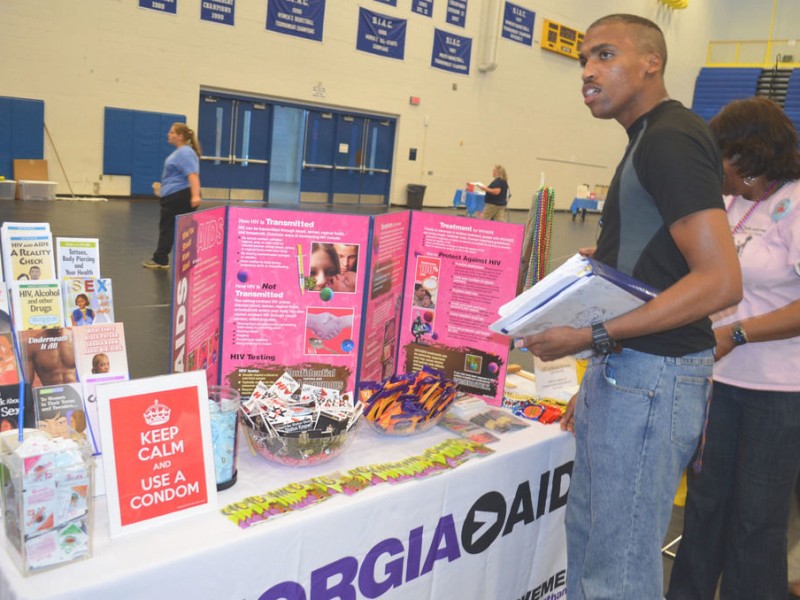
ALBANY — While the rates of HIV and sexually transmitted diseases have been high in Southwest Georgia for some time, the particularly disturbing fact is that these rates seem to be growing in the region’s youth population.
In light of that, a task force of community partners — including many connected to the health care field — are coming together to combat the problem.
Dr. Charles Ruis, health director for the Southwest Public Health District, said the task force was built after some individuals working within the health district realized how the rates were rising. The conclusion was that the situation was disturbing, and that lack of knowledge was the weak link. In light of that news there is now a renewed focus in getting the number of cases as low as possible with the help of everyone in the community.
From there, the task force was born.
“They were appropriately concerned about it, and after further investigation, came to realize it impacts (certain groups more),” he said. “It affects the youth of our population, and (we) know it is a very dangerous condition and one that can be difficult to understand.
“The efficiency of HIV medication has improved health. That is getting better, so perhaps older people are wiser about what their options are. But we may not have been doing a good job educating the youth. A 12-year-old is not capable of understanding on their own. With enthusiasm, and with the facts, I believe we can change the community.”
The Georgia Department of Public Health Office of Health Indicators for Planning (OHIP) follows data related to HIV and STDs. In 2014, the most recent year for which data is available, the Southwest Public Health District — which includes 14 counties — had 1,060 STD cases reported in the 13-19 age group. This was an increase from 2013, during which the area had 1,028 cases in the same age group.
For the 20-29 age group, the health district had 1,665 cases in 2014, an increase from 1,613 from the previous year, the OHIP said.
As far as HIV/AIDS is concerned, the OHIP reported 30 deaths in the district related to the disease in 2014, up from 26 in 2013. Hospital discharges related to the illness in 2014 were 113 in the 14-county region of Southwest Georgia, which is up from 82 the year before.
“Georgia has some of the highest HIV rates in the nation. There are significant rates of HIV in Dougherty County and Southwest Georgia,” said Jacqueline Jenkins, epidemiologist for the Southwest Public Health District.
The higher HIV and STD rates were already known, but the now recognized impact on the younger population has steered the primary focus toward working with that age group to ensure they are educated enough to make good decisions.
Last month, the group went before the Dougherty County School Board expressing concern about the problem as it relates to people under the age of 20 — saying that aggressive school-based education is a key factor in addressing the issue.
Public Health officials said the school board was receptive to the idea, and that the plan will be to work with them along with other organizations within the task force.
“We were very pleased and enthused about the interest of the school board,” Ruis said. “Every indication is that they want what is best for the youth of the community.”
Over time, Jenkins said people can expect to see more TV spots, billboards, social media alerts and speaking engagements on the issue — specifically focused on encouraging children to either be proactive or not engage in risky behavior at all. Over time, input from stakeholders will allow the message or methods to be re-tooled in a way that effectively furthers the cause, the epidemiologist said.
School nurses, for example, might turn out to be a very valuable resource for the task force.
“They work directly in all the schools with the students, so they are great advocates for education,” Jenkins said.
Phoebe Putney Health System formed the Network of Trust program over 20 years ago in response to a high teen pregnancy rate in the Southwest Georgia region. It is a grant-funded, in-school, interactive outreach program. The program has since branched out to have multiple goals such as decreasing teen pregnancy, and/or repeat pregnancies, promoting healthy families, decreasing child abuse, increasing self-esteem and preventing school drop-out.
Network of Trust, or NOT, is a member of the task force and works with multiple community groups and initiatives to further its reach and impact in Southwest Georgia. One of the ways it reaches out in the schools is through the placement of school nurses, likely making NOT a key factor in the fight against HIV and STDs in Southwest Georgia.
“While teen pregnancy rates in our region are on the decline, the rates of STDs and HIV among teens and young adults continue to rise,” said Angie Barber, director of the Network of Trust School Health Program. “Our goal at Network of Trust is to work closely with our communities to promote healthier generations through prevention, education and treatment. Our school nurses and teen parenting educators see first-hand the impact these diseases have on our young citizens. This opportunity to work with the HIV/STD task force could not have come at a better time.”
Another partner is Horizons Community Solutions, the umbrella organization for the Cancer Coalition of South Georgia. They came on board a few months ago after Public Health officials presented them the data, and the need to address the situation appeared obvious.
“We are interested in not only cancer, but other diseases impacting our community,” said Kimberly Scott, director of the Horizons Disparities Solutions Center. “There are a lot of underlying factors that influence disease.”
Scott said there are work groups within the task force putting resources into certain places — such as in area schools — in order to move the objectives forward, and that the plan the task force has should be effective, as long as the mission does not lose focus.
“We want to make sure we are reaching kids at risk,” she said.
Education is going out to parents as well as children, and some details are being ironed out as to precisely how it will all be carried out. On the whole, agencies are being encouraged to increase their efforts in getting the word out.
“Our long-term goal is to decrease the high rates of HIV and STDs in the community,” Scott said. “It is important the task force gain momentum.
“We are making sure we start educating youth early to stop HIV transmission. (The task force members) are passionate people who care about the community and want youth to live healthy and productive lives.”
The hub of the effort will be in Dougherty, but its impact should be seen throughout Southwest Georgia. The goal is for the rates of these diseases to go down, and for them to they stay down through the use of strategies that change the tide in the long run.
“We hope this is the kind of task force that will take root everywhere,” Jenkins said. “We want it to be inclusive everywhere. We want to see inclusion in each community.”
Related Articles
Dougherty Commission considers $104 million budget for 2026-2027 budget year
“The other side of the coin is you could have higher revenues than projected. We’re very conservative in budgeting revenues. That also reduces the need to use fund balance”

Albany police investigate suspicious Sunday death
A 21-year-old Turner Job Corps student who was found unresponsive on Sunday evening was later pronounced dead at Phoebe Putney Memorial Hospital. The death is under investigation.

James Rubino installed in new role at Marine Corps Logistics Command in Albany
James L. Rubino recently assumed the role as executive deputy of Marine Corps Logistics Command in Albany. In his new role he will oversee integrated logistics support.
