
Funding to go to Georgia airport sponsors following discontinuation of jet fuel sales tax collection
Dougherty County expected to receive $91,300 as part of $28 million included in amended FY 2018 budget
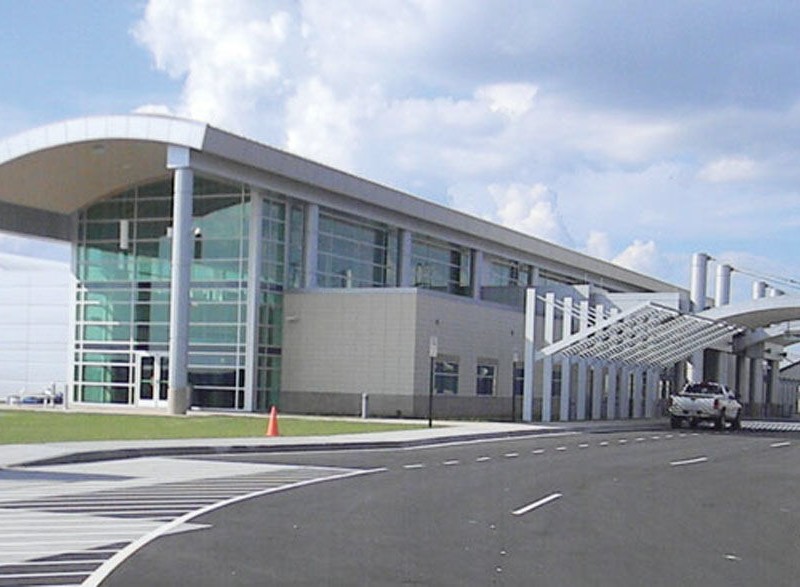
File Photo
By Jennifer Parks
ALBANY — Funding will be distributed to 48 communities following discontinuation of jet fuel sales tax collections by the Georgia Department of Revenue, but the impact on Dougherty County is expected to be minimal.
Following guidance from the Department of Revenue, which on Friday announced it will suspend collection of local jet fuel sales taxes in order to comply with Federal Aviation Administration regulations, Gov. Nathan Deal announced on Monday that $28 million will be made available to 48 communities with airports.
The funding, included in the amended Fiscal Year 2018 budget, will be provided to government airport sponsors through a Georgia Department of Community Affairs grant.
“Today, Georgia has taken critical action to ensure our federal funding is not jeopardized and local governments that rely upon local jet fuel sales tax are made whole,” Deal said. “In light of DOR’s announcement, which brings Georgia into compliance with the federal government, I’ve allocated $28 million to assist the 48 local governments affected by suspension of the local sales tax.
“The grants, based on the remaining time and monthly average of each community’s Special Local Option Sales Tax, will be disbursed by DCA by the end of this fiscal year.”
Funding amounts for government airport sponsors made available by Deal’s office show Dougherty County is expected to receive $91,300. The funding amounts range from $11 for Dodge County to $26.49 million for Clayton County — the latter of which is the location of the Hartsfield-Jackson Atlanta International Airport.
“(The Southwest Georgia Regional Airport) has two funding sources, state and federal grants and subsidies by the city of Albany,” Albany Transportation Director David Hamilton said Monday. “The fuel tax impact will have minimal impact to us.
“For smaller airports, this is particularly good (although) we are a smaller airport. (For those under) an authority other than a city department, (this) will be great for them.”
Hamilton said he wanted to ensure the public that the airport is in strong financial health.
“We are OK with our budget and our operations,” he said.
The announcement by DOR brings Georgia into compliance with the 2014 FAA rule on taxation of aviation fuel. The FAA rule affects local sales taxes authorized and collected after 1987 on the purchase of jet fuel.
“This policy bulletin is to announce that, as of July 1, 2018, the State Revenue Commissioner will no longer seek collection of, and vendors should no longer collect, local sales and use taxes on retail sales and uses of jet fuel with respect to local sales and use taxes that were enacted after Dec. 30, 1987,” the policy said. “Local sales and use taxes enacted on or before Dec. 30, 1987 must still be collected. This action is being taken to ensure Georgia is in compliance with federal law prohibiting the use of non-grandfathered taxes on sales of jet fuel at airports for any purpose other than airport capital or operating costs, if the airport is benefiting from federal aviation grants and other federal support.”
The policy bulletin added that the FAA issued a revised policy on Nov. 7, 2014 to address the use and diversion of airport revenue through taxes on aviation fuel and to amend its policy and procedures concerning the use of airport revenue. It is meant to clarify the 1999 policy regarding the scope of what state and local taxes on aviation fuel are subject to airport revenue restrictions of the Airport and Airway Improvement Act and what entities are responsible for non-compliance with those statutes and therefore subject to federal sanctions.
In its revised policy, the FAA has interpreted the law to say that any state or local tax enacted after Dec. 30, 1987 that may be imposed on aviation fuel is subject to the revenue use restrictions. The agency also concluded that any entity imposing, collecting or administering tax enacted after that time on aviation fuel not used for the operating costs or capital improvements of a federally assisted airport may be subject to sanctions, in addition to sanctions against any airport sponsor accepting federal assistance.
This means that the limits on use of aviation fuel tax revenues apply to:
— Any tax imposed on aviation fuel by either a state or local government taxing authority whether or not it is acting as a sponsor or airport owner or operator;
— Any tax on aviation fuel, whether the tax is imposed only on aviation fuel or is imposed on other products as well as aviation fuel;
— Taxes on all aviation fuel dispensed at an airport, regardless of where the taxes on the sale of fuel at the airport are collected;
— A new assessment or imposition of a tax on aviation fuel, even if the tax could have been imposed earlier under a statute enacted before Dec. 30, 1987.
“The FAA has made clear in its Revised Policy that state and local jurisdictions, in addition to airport sponsors, may be penalized for imposing taxes on aviation fuel that are not appropriately used for airport purposes,” the policy said.
Related Articles
Dawson Council approves $400,000 lifeline in emergency meeting as financial accountability remains elusive
Less than a week after city officials publicly acknowledged the City of Dawson cannot continue operating without additional financing, the Dawson City Council convened a hastily called emergency meeting Tuesday evening and unanimously approved authority to borrow up to $400,000 through a tax anticipation note.

Adult leadership group spreads concept to high school students
“The purpose of Albany Junior Leaders is to pull together leaders from all over the community. We wanted to give these youth the same experience and the same exposure we’re getting in Leadership Albany.”
Albany/Dougherty County among local governments looking at data centers
“Our understanding is that data center developments look like an easy fix for the problems that face rural America, but this is a Faustian deal at best. You can see the effects in communities across the state and country.
