
TFAH report indicates improvement needed in health emergency preparedness
‘Ready or Not? Protecting the Public from Diseases, Disasters and Bio-terrorism’ released Tuesday
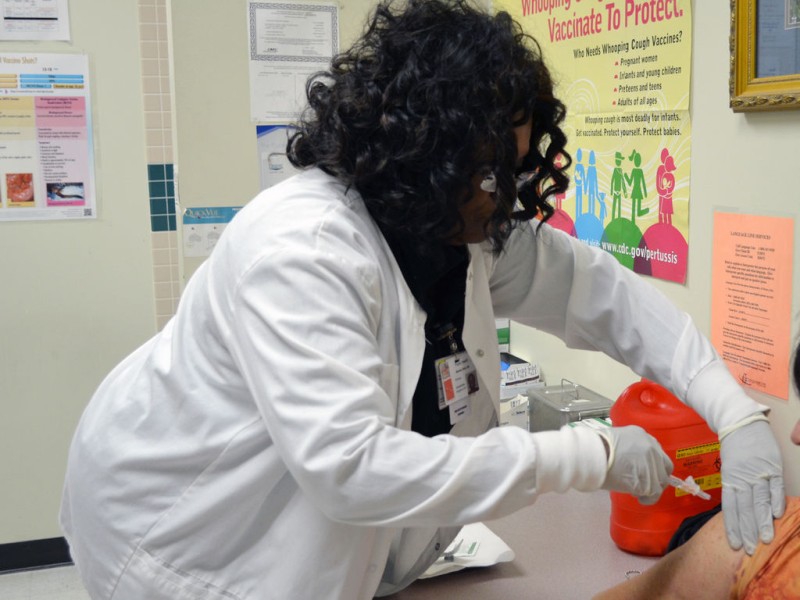
By Jennifer Parks
ALBANY — When it comes to preparedness during public health emergencies, the conclusion of a recent report is that while improvements have been made over time, complacency is still evident when it comes to expecting the unexpected.
In “Ready or Not? Protecting the Public from Diseases, Disasters and Bio-terrorism,” 26 states and Washington, D.C. scored a six or lower on 10 indicators of preparedness. Georgia was among 17 states, along with the District of Columbia, to score a “6.”
Alaska and Idaho scored lowest at 3 out of 10, and Massachusetts scored the highest at 10 out of 10.
The report, issued by the Trust for America’s Health, is meant to examine the nation’s ability to respond to public health emergencies, track progress and vulnerabilities, and review state and federal preparedness policies. It concluded the nation is often caught off-guard when a new threat arises, resulting in attention being diverted from other priorities.
Officials at the Southwest Public Health District deferred comment to the Georgia Department of Public Health, which responded Tuesday by saying the report does not give an overall picture of the state’s performance.
“The TFAH report is not designed to be a measure of performance,” said Nancy Nydam, a spokeswoman for DPH. “It is a collection of information gathered from a variety of, and possibly inconsistent, sources. Data collected for the report may not present a true snapshot of the current situation where strides toward improvements have already been made.
“Two important examples of that are Georgia’s response to Ebola and Zika. Georgia’s preparation and preparedness for the potential of Ebola in the state and the ability to quickly respond to any deadly infectious disease has become a model for the entire country.
“While Zika is far different from Ebola in how it is transmitted and the individuals most at risk, the state’s response plan for a potential outbreak was built on some of the same strategies — communication, collaboration, protection — that informed the Ebola response and will meet the challenges of the next emerging infection.”
The Peach State scored positively on funding commitment for maintaining or improving Public Health funding from Fiscal Year 2014-15 to FY 2015-16, and for the state having at least one accredited Public Health department. It also scored indicators for climate change readiness for receiving a “C” or above in “States at Risk: America’s Preparedness Report Card,” and for food safety for increasing the speed of using pulse-field gel electrophresis testing for E. coli.
Georgia also gained two indicators for Public Health labs by providing bio-safety training and/or providing information about bio-safety training courses for sentinel clinical labs, and for labs reporting having a bio-safety professional on staff from July 1, 2015-June 30, 2016.
The report found that 26 states increased or maintained funding from FY 2014-15 to FY 2015-16, while 10 states vaccinated at least half of their population ages 6 months and older against the seasonal flu from July 2015 to May 2016. Forty-five states and D.C. increased the speed of DNA fingerprinting, while ten states have a formal access program or a program in progress for getting private-sector health care staff and supplies into restricted areas during a disaster.
Thirty states and D.C. met or exceeded the overall national average score of the National Health Security Preparedness Index. Thirty-two states and D.C. received a grade of “C” or above in “States at Risk.”
“The National Health Security Index identifies 130 points addressing the overall health of the public. Of those points, there are only about 15 that public health has direct control over,” Nydam said. “The index identifies strengths as well as gaps in the protections needed to keep people safe and healthy in the face of large-scale public health threats, and Public Health has the ability — and responsibility — to work with and influence those in direct control.”
Meanwhile, some areas of accomplishment include improved emergency operations, communication and coordination; support for the Strategic National Stockpile and the ability to distribute medicines and vaccines during crises; upgrades in health labs and foodborne illness detection capabilities; and improvements in legal and liability protections during emergencies, the report said.
Ongoing gaps listed on the report include a lack of a coordinated, inter-operable, near real-time bio-surveillance system; insufficient support for research and development of new medicines, vaccines and medical equipment keeping pace with new threats; gaps in the ability of the health care system to care for a mass patient influx during an outbreak or attack; and cuts in Public Health personnel.
“This is not a complete analysis, but we feel it is important to prepare this report because we feel the public has a right to know,” said Rich Hamburg, interim president and CEO for TFAH, upon the report’s release.
The “Ready or Not?” report provides a series of recommendations addressing the gaps in emergency health preparedness. The report was supported by a grant from the Robert Wood Johnson Foundation, and is available at healthyamericans.org/reports/readyornot2016.
Related Articles

Albany recycling center enacts material separation rule
Mixed items will no longer be accepted at the Albany recycling center at its 2521 Meredyth Drive facility. Individuals will now be required to separate items befor they will be accepted.
Albany City Commission takes action on proposed downtown hotel, two theater renovation projects
“We’re taking the original building back to, hopefully, it’s glory days. One of the cool things about the project is we are going to restore the balcony. It’s going to have a balcony, so it’s going to be super cool.”
Dawson’s $10.2 million sewer project leaves major financial questions unresolved
As Dawson’s finance director resigns and operating pressures mount, records show $10.2 million in sewer funding, frozen loans, missing audits and gaps in the public accounting of project money.
