
FEMA expert offers hope for restoring storm-damaged keepsakes
Lori Foley says many treasured items can be saved with proper process
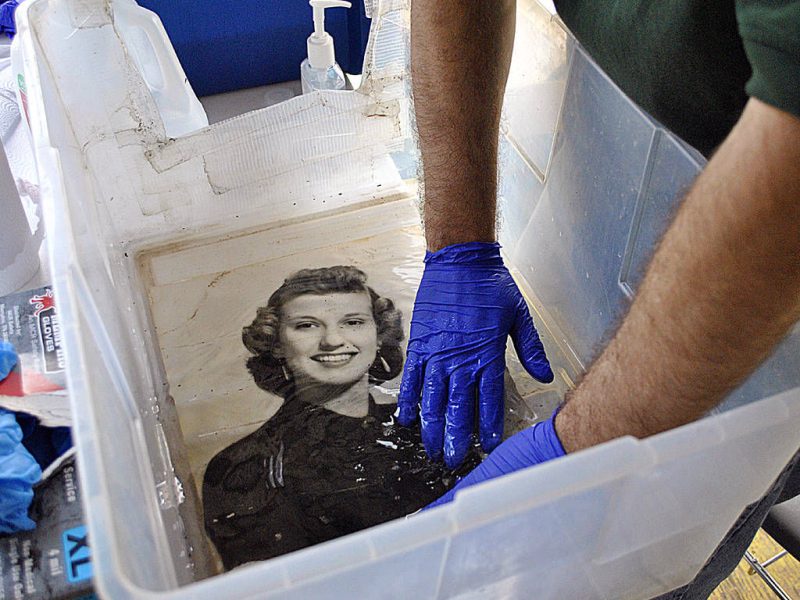
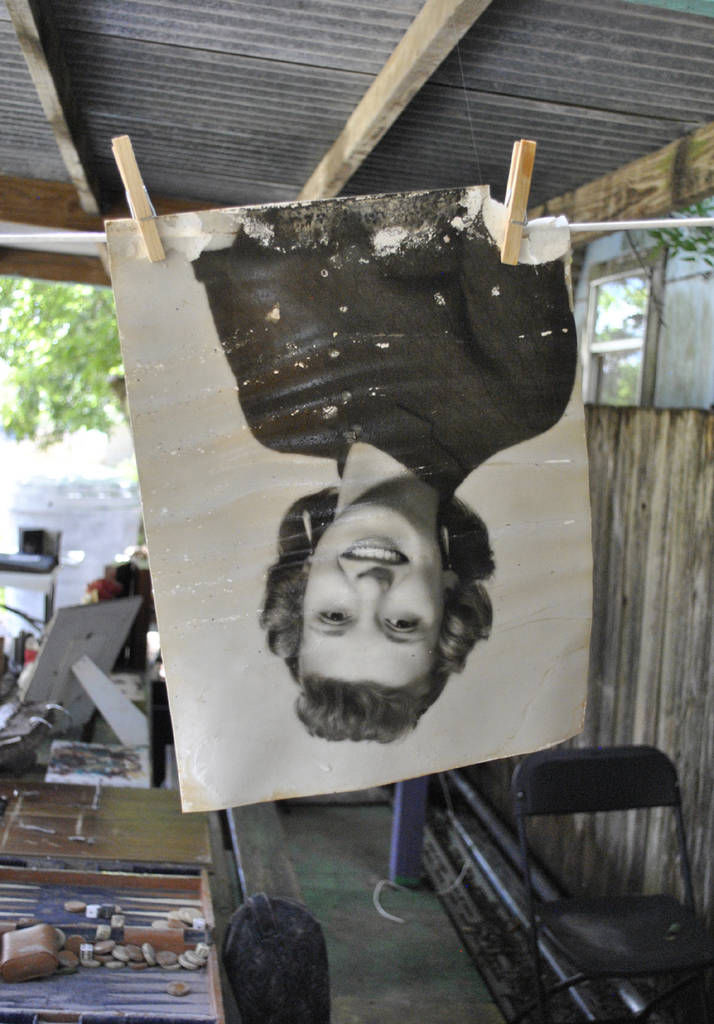
Archivists recommend rinsing photographic prints in clean water. Air dry them by laying them flat, face up, on absorbent paper. Don’t let the photographs come in contact with each other. Photos can also by hung up to air dry on a makeshift clothesline. (Photo courtesy of Archivists of Central Texas)
By Terry Lewis
WASHINGTON – Disasters can happen at any time and in any place, often without warning. Forced to evacuate in a hurry, an individual may not have time to gather up treasured family heirlooms and valuables.
But what happens next if a cherished personal belonging such as a photo, book or docuent document sustains water damage in a hurricane, flood or even a tornado? Is it lost forever?
Not necessarily, according to Lori Foley with the Federal Emergency Management Agency. Foley is the administrator of the Heritage Emergency National Task Force, a partnership of 42 national service organizations and federal agencies co-sponsored by FEMA and the Smithsonian Institution. The task force was founded in 1995 to protect cultural heritage from the damaging effects of natural disasters and other emergencies.
Foley is an expert on salvaging water-damaged, important personal belongings and can offer practical tips and steps on what to do if this situation happens.
“As the administrator of the Heritage Emergency National Task Force, the mission of the task force to preserve the cultural history of the United States from the damaging effects of natural disasters and other emergencies,” Foley said. “So, I work with cultural stewards, libraries and museums, first responders, emergency mangers and the public to prepare them to respond to disasters that affect cultural and historic resources.
“My passion is helping people save the things that matter to them, whether it’s families, communities or an individual, those are the things that matter to us. That’s what I love most about what I do.”
The losses that are the result of disasters are usually measured in dollars, but often the losses that matter the most are the cherished items and heirlooms that are closest to the hearts of individuals and families.
Although a treasured item may be damaged, it is often possible to salvage it with a little patience, prompt action and professional tips.
“We have resources that people can refer to and primarily be a source of information,” Foley said. “I’ve been involved with the Task Force since 2011. I started out with a private non-profit when that private non-profit folded in 2015 FEMA snatched me up.”.
The 42 agencies associated with the Task Force provide a wide range of services. Foley said the typical phone call the agency gets is a person asking for help or information, and Task Force officials do their best to point the person to the closest related source of assistance.
“Often I will send them to a conservator or conservation specialist at a museum or library that’s in your area because they have staff with the skills and the knowledge that can help you start salvaging your material,” Foley said.
As a general guide for water damaged pieces, FEMA recommends:
• If the object is still wet, gently rinse it with clear, clean water. If it is dry, clean off silt and debris with a soft brush or dab it lightly with a damp cloth.
• Air dry wet or damp objects indoors, if possible. Sunlight and heat may be too intense, causing splits, warping and buckling. Increase airflow with fans, open windows or air conditioning, but do not point fans directly at drying objects. Inhibit the growth of mold and mildew by reducing humidity with dehumidifiers.
• Personal safety is important when working with objects retrieved from contaminated water. Wear disposable vinyl or nitrile gloves, protective clothing, goggles, and, when possible, use a respirator while working.
Foley added the best starting point would be to find a conservator at www.conservation-us.org/membership/find-a-conservator.


Related Articles
Dawson Council approves $400,000 lifeline in emergency meeting as financial accountability remains elusive
Less than a week after city officials publicly acknowledged the City of Dawson cannot continue operating without additional financing, the Dawson City Council convened a hastily called emergency meeting Tuesday evening and unanimously approved authority to borrow up to $400,000 through a tax anticipation note.
Dawson approves $68K excavator purchase after months of contradictory public statements
The decision concludes one portion of a controversy that has generated months of public scrutiny but leaves several unanswered questions regarding how the city’s original machine was damaged, whether employees were held accountable and what documentation supports the decision to replace rather than repair it.
Dawson proposes borrowing up to $420,000 to stay afloat as finances unravel
Documents obtained by The Dawson News show city officials are proposing to balance the budget through a transfer from the Public Utilities Fund while simultaneously seeking authority to borrow as much as $420,000 from a private financial institution to continue meeting payroll and other operating expenses as Dawson works to complete financial audits that have remained unfinished since 2023.
